

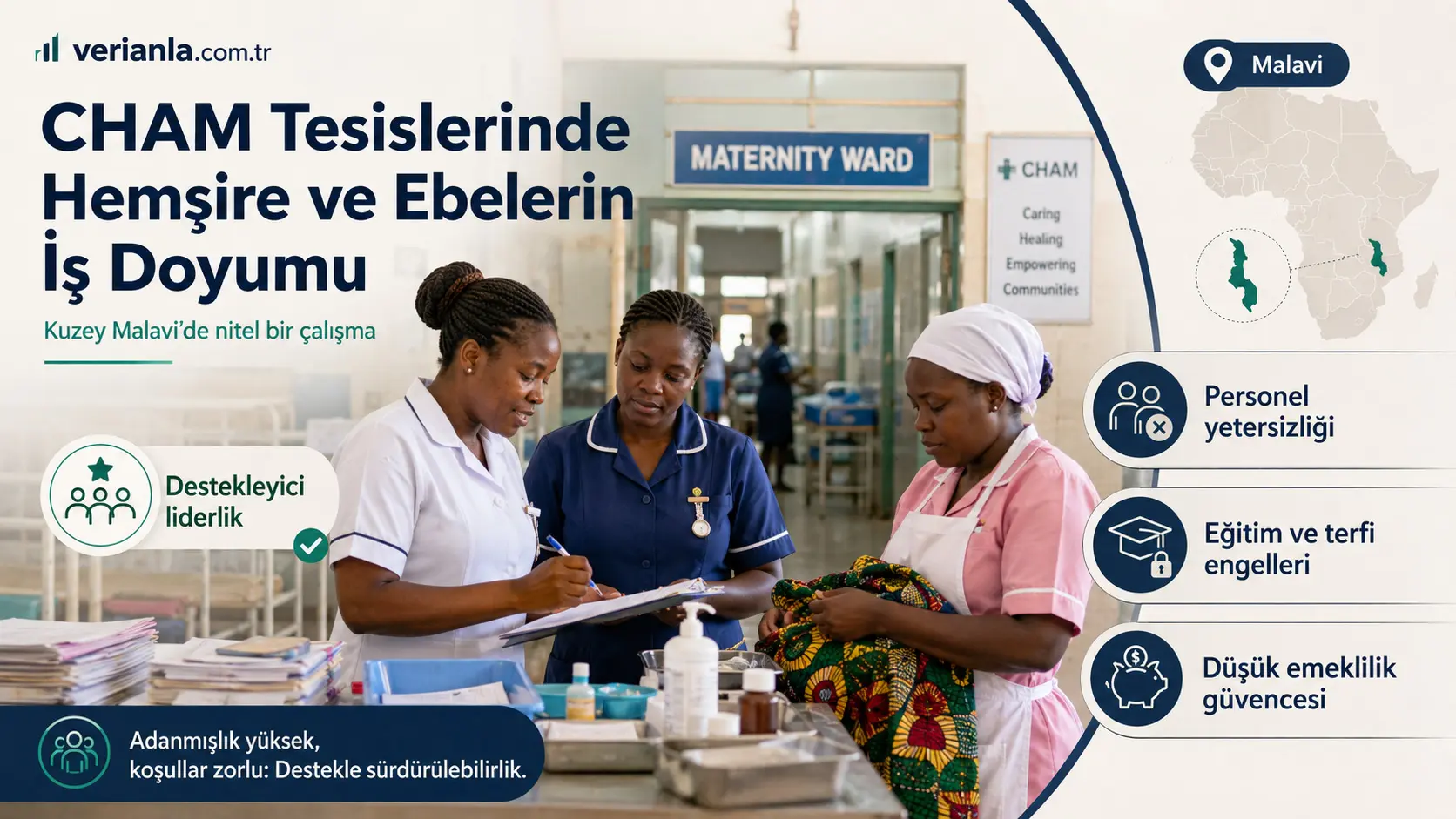
Job satisfaction ya nurses na nurse-midwives si issue ya employee happiness pekee. Ni structural indicator yenye direct effect kwa quality ya health system, patient safety, continuity of services, health-worker retention, professional motivation na quality of care. Introduction ya study ina-define job satisfaction kama kiwango cha satisfaction employee anachohisi kuhusu kazi yake. Katika nursing na midwifery, satisfaction hii inahusiana closely na professional recognition, working conditions, interpersonal relationships, ability to provide high-quality patient care na meaning ambayo profession inampa mtu.
Main problem ya research ni kwamba nurses na nurse-midwives ni backbone ya health system nchini Malawi, lakini many working conditions zinawazuia kufikia adequate job satisfaction. Study inalenga especially CHAM facilities. CHAM inawakilisha faith-based health facilities zenye important role katika health-service delivery ya Malawi. Facilities hizi ni critical particularly in rural na semi-rural areas kwa access to healthcare. Lakini experiences za nurses na midwives katika facilities hizi zinaweza kuwa na human-resource na motivation problems tofauti na public hospitals.
Study haiulizi tu “nurses satisfied?” ili kuelewa job satisfaction. Inakaribia more detailed questions: Nurses na nurse-midwives wana-perceive job satisfaction vipi? Ni working conditions zipi zinaongeza satisfaction? Ni structural barriers zipi zinawafanya wachoke na kazi? Professional development na promotion barriers zinaathiri quality of care vipi? Staff shortage inageuka kuwa nini katika daily care practice? Ni factors zipi zina-shape decisions za nurses kubaki au kuondoka CHAM?
Background section ina-link job satisfaction na Herzberg distinction kati ya motivation na hygiene factors. Kwa approach hii, baadhi ya factors zinamwezesha employee kuunda meaningful connection na kazi na kumotivate; mfano achievement, skill development, recognition na professional growth. Factors nyingine zinahusu basic workplace conditions; mfano salary, benefits, work environment, management na job security. Distinction hii ni useful kwa findings, kwa sababu CHAM facilities zina factors zinazoweza motivate pamoja na hygiene factors zinazoweza kusababisha dissatisfaction.
Basic logic ya study inaweza kuonyeshwa kwa relationship hii. Expression haijatolewa kama mathematical equation katika study; ni conceptual representation ya jinsi factors zinavyofanya kazi together:
\[ \text{İş doyumu} \approx \text{Destekleyici liderlik} + \text{Tanınma} + \text{Mesleki gelişim} + \text{Yeterli personel} + \text{Adil ücret ve güvence} - \text{Ağır iş yükü} - \text{Tükenmişlik} - \text{Terfi engelleri} \]
Katika relationship hii job satisfaction haitoki kwa factor moja. Kwa mfano, nurse anaweza kuona patient care meaningful, lakini kama anashika shift alone kila mara, hawezi kupata lunch break, hapati promotion na anaambiwa resign ili kwenda training, job satisfaction inakuwa weak. Kinyume chake, even when salaries si high, supportive leadership, team solidarity, recognition na training opportunities zinaweza kuongeza satisfaction. Findings zinafanya multi-layered structure hii visible kupitia own words za nurses na midwives on the ground.
Research ilifanywa kwa qualitative approach. Design hii ni appropriate kwa topic, kwa sababu job satisfaction si numerical satisfaction score pekee. Job satisfaction ya nurses inahusiana na jinsi wanavyoonekana ndani ya institution, relations na managers, meaning wanayoweka katika patient care, jinsi wanavyoexperience workload physically, jinsi education dreams zao zinavyoblocked na future wanaiona wapi. Experiences kama hizi zinaeleweka better kwa in-depth interviews.
Study ilifanywa katika three CHAM facilities: David Gordon Memorial Hospital, Ekwendeni Mission Hospital na St. John’s Hospital. Research population ilielezwa kuwa total 116 nurses na nurse-midwives katika facilities hizi tatu. Kati yao 17 walishiriki. David Gordon Memorial Hospital ilikuwa na participants 6 kati ya nurses/midwives 39, Ekwendeni Mission Hospital 5 kati ya 41, na St. John’s Hospital 6 kati ya 38.
Participants walichaguliwa kwa purposive sampling. Nurses na nurse-midwives working in CHAM facilities for more than two years walijumuishwa. Student nurses, interns na those with less than two years in CHAM waliondolewa. Selection hii ililenga participants kutathmini institutional conditions kutokana na accumulated experience, si short-term impressions.
Data zilikusanywa kwa in-depth interviews. Interviews zilifanywa katika private room, audio-recorded kwa participant permission na kila interview iliendelea approximately 30-40 minutes. Interview guide iliandaliwa around three main focuses: perceptions of nurses and midwives about job satisfaction, challenges reducing satisfaction, na measures that could improve job satisfaction in CHAM hospitals. Participant confidentiality ililindwa kwa codes.
Data zilichambuliwa kwa inductive thematic analysis. Researcher alisikiliza audio recordings, akatranscribe, akaclean data, akaweka participant labels consistently na akafuata Braun and Clarke’s six-stage thematic-analysis approach. Process ilijumuisha familiarization with data, generating initial codes, developing themes, reviewing themes, defining/naming themes na writing report. Method hii inalenga systematically identifying recurring meaning patterns katika interviews.
First major positive finding ilikuwa good relationships na nursing leaders kwa baadhi ya participants. Especially close managers kama principal nursing officer walifuatilia problems katika department, wakatoa support wakati wa staff shortage au wakafanya field activities directly. Participants waliona hii motivating. One participant alisema manager aliona staff shortage na akasaidia workload; mwingine ali-link manager’s direct role in outreach clinics na feeling kwamba “leader wetu yupo kwa ajili yetu.”
Finding hii inaonyesha supportive leadership ni powerful kwa job satisfaction. Nurses wakifanya kazi under heavy workload, manager akionekana si supervisor au fault-finder tu bali mtu anayeelewa field burden na akisimama na team when necessary, motivation huongezeka. Leadership hii haiwezi kutatua salary problems peke yake, lakini inaweza strengthen organizational commitment na energy for patient care.
Lakini leadership experience haikuwa same katika all facilities. Baadhi ya participants walisema relationships with managers were weak, staff walikuwa anxious manager akiingia department na visits zilionekana more like fault-finding kuliko supportive supervision. Hii inaonyesha management style inaweza kuathiri job satisfaction differently hata ndani ya same CHAM structure. One manager’s presence creates support; mwingine creates control na fear.
Second positive factor ilikuwa recognition na reward. Katika baadhi ya hospitals, contributions za health workers zilitambuliwa kwa annual best-worker awards, gifts au shopping vouchers. Participants walisema practices hizi ziliwamotivate kufanya kazi more na contribute to patient care. Lakini study pia inaonyesha recognition practices hazikuwa consistent across all facilities. Katika places fulani recognition ilikuwa systematic, katika others ilikuwa visible only on special days au kupitia external professional organizations.
Importance ya recognition ni hii: nursing na midwifery labor mara nyingi ina physical, emotional na invisible workload. Patient recovery, reassuring family, managing emergencies, night shift, birth support, intensive monitoring na chronic care si technical tasks tu. Kama contribution haionekani, especially ikiwa combined with low pay na heavy workload, professional burnout inaweza kuongezeka. Hivyo hata small rewards zinaweza symbolically kumaanisha “work is seen.”
Study pia ilijadili hospital allowances. Katika all study areas participants walipata monthly hospital top-up allowance on top of salary. Lakini amount ilionekana very low. Participants katika facilities fulani walitaja MK4.500 au about MK5.000; after tax kiasi kilichobaki kilikuwa around MK2.300 na walisema hakitoshi kununua kitu meaningful kwa home. Hivyo having an allowance peke yake haitoi motivation; ikiwa amount ni low relative to cost of living, haitimizi expectation.
First major structural problem reducing job satisfaction ilikuwa limited professional-development na education opportunities. Participants walisema walipojaribu advance professionally au continue education hawakupewa release, na wakati mwingine walipewa difficult choices kama resigning au kusoma huku wakifanya weekend/night shifts. Baadhi pia waliona uncertainty na bias katika nani anaachiliwa kwenda study.
Finding hii inaonyesha job satisfaction si current work conditions pekee. Professional future ni muhimu sana. Nurse anaweza kutaka kutoka diploma kwenda degree, improve knowledge na skills, na prepare for higher positions. Organization ikizuia growth hii, employee anaweza feel trapped. Professional-development barrier haiathiri career binafsi tu; pia access to updated knowledge, clinical competence na patient-care quality.
Participants pia walisema access to short professional trainings na workshops ilikuwa limited. One participant alisema alifanya kazi hospital miaka seven na alienda workshop only once in 2018. Another alisema colleagues in public hospitals walienda workshops more often, lakini CHAM employees mara nyingi remained tied to salary only, na hii ilikuwa demotivating. Wengine walisema same people walipelekwa training repeatedly huku others hawakupata hata moja kwa mwaka.
Finding hii inaonyesha training opportunities si few only; distribution yake pia ni fairness issue. Opportunities zikiwa scarce, nani anachaguliwa inakuwa sensitive. Ikiwa selection si transparent, distrust na perception ya favoritism inaweza develop. Hii hupunguza job satisfaction na kuunda quiet resentment ndani ya team.
Second major problem ilikuwa human-resource shortage na heavy workload. Participants walisema katika many shifts one nurse covered entire ward, ambayo ilikuwa extremely tiring na iliathiri patient-care quality. One participant alisema alirudi home exhausted daily na knowing patients did not receive attention they deserved made job satisfaction difficult. Another alisema except maternity in some cases, most departments worked with one nurse, na when there were many patients they could not go for lunch because they could not leave patients alone.
Statements hizi zinaonyesha staff shortage si abstract “human-resource gap.” Inamaanisha nurse hawezi kula, hawezi kupumzika, hawezi take annual leave easily, hawezi spend enough time with patients, na anarudi home physically and emotionally exhausted. More importantly, nurse anataka kufanya job well lakini conditions haziruhusu, hivyo anaweza experience professional guilt na helplessness. Hii inaongeza burnout.
Participants wali-link staff shortage si recruitment delays pekee, bali leadership na organizational culture. Some alisema managers’ approach na fault-finding attitudes ni reasons nurses leave CHAM facilities. Others alisema kutokana na religious/diocesan control structure, even locum duty outside inaweza require permission. Accounts hizi zinaonyesha job satisfaction si salary au staffing-number issue pekee; pia inahusiana na employee autonomy na treatment within institution.
Third major problem ilikuwa lack of appreciation, promotion barriers na weak retirement security. Participants walisema hawajapromote despite many years of service, na hata baada ya bachelor’s degree waliendelea kulipwa kama diploma technician au old cadre. Some compared themselves with public-hospital colleagues who advanced to higher grades while CHAM staff did not get similar opportunities.
Promotion si salary increase tu. Kwa nurse promotion inaonyesha institution imetambua experience, education, responsibility na professional growth. Bila promotion employee anaweza feel “nimefanya kazi nine years lakini nimebaki pale pale.” Especially ikiwa education imepanda lakini position haibadiliki, meaning ya staying weakens. Participants therefore proposed more positions kama nursing officer, senior nursing officer na chief nursing officer in CHAM facilities.
Retirement/pension issue inafanya job satisfaction kuwa long-term security matter. Participants walisema nurses retiring from CHAM get much lower packages kuliko counterparts in public hospitals. One participant alitoa example ya nurse aliyefanya kazi more than 30 years na akapata retirement package karibu 8 million Malawian Kwacha; another alisema public employees can receive regular monthly payments after retirement, while in CHAM once gratuity/pension paid, process ends.
Finding hii inaonyesha nurses hawaangalii current salary tu, bali jinsi watakavyolindwa at end of professional life. Employee akiamini atapata inadequate retirement security after long service, desire ya transfer to public hospital earlier au migrate abroad inaweza kuongezeka. Hii ni serious risk kwa retaining experienced personnel.
First policy solution proposed by participants ilikuwa merging CHAM pension system with government employee pension system. Participants walisema salary delays reduced after government took over salary management na walitaka similar arrangement for pensions. Proposal hii inaonyesha expectation ya more equal social security with public system.
Second recommendation ilikuwa direct Ministry of Health involvement in recruitment of nurses for CHAM facilities. Participants walisema zamani government posted workers to both public na CHAM facilities; sasa CHAM secretariat runs recruitment after government approval na process inaweza kuwa slow. Delayed recruitment inawaongezea workload existing workers. Hivyo direct au faster recruitment mechanism inaonekana key solution to staff shortage.
Third recommendation ilikuwa creating more senior nursing positions in CHAM facilities. Participants walisema public hospitals have more nursing officer positions, CHAM staffing structure is more static. Nurse akiadvance from diploma to degree na hakuna suitable position, anaweza consider leaving. Kwa hiyo reviewing cadre structure ni important si kwa individual promotion tu, bali kwa retaining qualified human resources.
Fourth recommendation ilikuwa opening and making promotion processes fair. Participants walisema walizuiwa kushiriki Ministry of Health promotion interviews, walibaki same level kwa years na advanced education haikuonekana in position. Hii weakens organizational commitment. Clear, predictable promotion policies linked to performance na education can increase job satisfaction.
Fifth recommendation ilikuwa increasing allowances. Participants walisema current top-up allowance amount is not aligned with living standards. Hii inaonyesha small financial incentive only motivates if meaningful. Kama amount ni symbolic na becomes even lower after tax, inaweza create sense of inadequacy instead of appreciation.
Sixth recommendation ilikuwa allowing nurses to pursue professional-upgrading education. Participants walisema being forced to resign for education au studying under very heavy work conditions is unrealistic. Organization blocking education due to staffing shortage inaweza appear understandable short-term, lakini long-term inaweza make qualified staff leave. Balanced models could use education planning, rotation, study leave na return-of-service obligations.
Discussion section links findings to broader literature. Supportive leadership na good employee-manager relationship increase job satisfaction; recognition and rewards improve psychological well-being and satisfaction; staff shortages and heavy workload increase burnout; training and career-development opportunities matter for employee commitment; promotion and retirement security are key motivators in retention.
Historical importance ya study ni kuongeza qualitative data from CHAM facilities to existing Malawi literature on nurses and midwives’ job satisfaction. Previous studies may have covered public hospitals or general nurse satisfaction, lakini understanding CHAM-specific human resources, promotion, pension na leadership conditions is important for health policy. CHAM facilities carry important service load, so dissatisfaction there can directly affect continuity of care.
Today, study inaonyesha health-worker migration and retention problems hazielezewi na national salary levels pekee. Nurses wanaweza leave for better pay; but also because they cannot train, cannot be promoted, do not feel supported or recognized, have weak retirement security, or work under constant overload. Hivyo retention policies lazima ziwe multidimensional.
Kwa future, most important lesson ni need to systematically study differences in working conditions between CHAM and public health system. CHAM facilities ziki-perceived as weaker for education, promotion, retirement and staffing support, retaining experienced personnel will be harder. Hii inaweza affect quality of care especially in rural and high-need areas. Future research should use larger multicenter mixed-method studies supported by quantitative job-satisfaction scales.
Kwa everyday healthcare, message ya study ni clear: nurse job satisfaction ni invisible but powerful factor affecting how patient care is delivered. Nurse anayeshika ward alone, hawezi kupata training, hapromote, haoni retirement secure, na anatarajia fault-finding badala ya support from manager atachoka. Kwa upande mwingine, team support, fair management, clear career path, sufficient staffing, realistic allowances na professional development opportunities protect both employee and patient.
Strengths za study ni direct experiences of nurses and midwives in field, inclusion of three different CHAM facilities, focus on participants who had worked more than two years, in-depth interview method na thematic analysis that reveals both positive and negative dimensions of job satisfaction.
Limitations pia ni important. Study ilifanywa na 17 participants tu katika three CHAM facilities in Northern Malawi. Hivyo haiwezi generalized directly to all CHAM facilities au whole Malawi health system. Data ni subjective interviews; no quantitative job-satisfaction scale, no patient-care outcome measurement, no comparative interviews with managers or policy-makers. Study ni unreviewed preprint, hivyo findings zinahitaji careful reading.
Study inasema: katika selected CHAM facilities in northern Malawi, nurses’ and nurse-midwives’ job satisfaction can be strengthened by supportive leadership and recognition, but can be seriously weakened by staff shortages, heavy workload, limited educational opportunities, promotion barriers, low allowances, weak retirement security and some management relationships.
Study haisemi: a specific policy definitely increases job satisfaction. Haisemi all CHAM facilities are in same situation. Haimmeasure direct effect of nurse job satisfaction on patient outcomes in this sample. Participant recommendations si implemented interventions with proven effects. Findings should be seen as experiences and perceptions from qualitative interviews.
Mbinu na Matokeo ya Utafiti
Study hii ni qualitative exploratory case study inayochunguza experiences na perceptions kuhusu job satisfaction miongoni mwa nurses na nurse-midwives working in selected CHAM health facilities in Northern Malawi. Hakuna new intervention iliyotestwa, quantitative scale haikutumika na patient outcomes hazikupimwa. Research focus ni kuelewa factors increasing and reducing job satisfaction kupitia own narratives za workers.
| Method Component | How Applied in Study? | Scientific Meaning |
|---|---|---|
| Research approach | Qualitative research approach | Designed for detailed understanding of nurses’ and midwives’ job-satisfaction experiences. |
| Research design | Exploratory design / case study | Experiences in specific CHAM facilities were examined in depth. |
| Study setting | David Gordon Memorial Hospital, Ekwendeni Mission Hospital and St. John’s Hospital | Three selected CHAM health facilities in Northern Malawi were evaluated. |
| Study population | Total 116 nurses and nurse-midwives across three facilities | Research collected experience from this population through qualitative sample. |
| Participant number | 17 nurses and nurse-midwives | Small but in-depth sample used for qualitative interviews. |
| Participant distribution | DGMH: 6, EMH: 5, SJH: 6 | Participation was obtained from each of three facilities. |
| Sampling method | Purposive sampling | Participants with at least two years of CHAM experience were selected. |
| Inclusion criterion | Being a nurse or nurse-midwife at CHAM study sites, working more than two years, providing written and verbal consent | Focus was placed on workers with sufficient institutional experience. |
| Exclusion criterion | Those working less than two years in CHAM, student nurses and interns | Short-term and training-stage experiences were excluded. |
| Data collection | In-depth interview guide, audio recording, private-room interviews of 30-40 minutes | Participant perceptions and experiences were recorded in detail. |
| Analysis method | Inductive thematic analysis; Braun and Clarke’s six-stage approach | Recurring themes and subthemes were derived from data. |
| Ethical approval | NONM and Mzuzu University Research Committee; plus permission from hospital directors | Institutional and ethical permissions were obtained. |
Main themes increasing and decreasing job satisfaction can be summarized as follows:
| Main Area | Subtheme / Findings | Meaning of Participant Experience |
|---|---|---|
| Relationship with leaders | Supportive supervision in some facilities; fault-finding management perception in others | Management style directly affects job satisfaction. |
| Recognition and reward | Best-worker awards, gifts or vouchers; but inconsistent implementation | Being recognized creates motivation, but not equally across all facilities. |
| Additional allowance | Monthly hospital top-up allowance; but very low and sometimes reduced further after tax | Financial incentive exists, but fails to satisfy when mismatched with living costs. |
| Professional development | No permission for upgrading education, limited access to workshops and training | When career development is blocked, commitment and motivation decrease. |
| Staff shortage | Single-nurse shifts, inability to take breaks, difficulty with annual leave, burnout | Heavy workload may affect both worker health and patient-care quality. |
| Promotion barriers | No promotion despite long years of service and educational upgrading | When experience and education are not recognized, intention to leave may increase. |
| Retirement/pension | CHAM retirement packages perceived as weaker than public hospitals | Lack of long-term security deepens retention problems. |
Measures proposed by participants to improve job satisfaction can be organized like this:
| Proposed Measure | Participants’ Rationale | Policy / Management Meaning |
|---|---|---|
| Merge CHAM pension system with government employee pension system | CHAM retirement packages are perceived lower than those of public employees. | Better long-term security may support retention of experienced workers. |
| Direct Ministry of Health role in recruiting nurses to CHAM facilities | Current recruitment process can be slow and create staffing gaps. | Faster coordinated recruitment may reduce shift burden and burnout. |
| Create more senior nursing positions | CHAM cadre structure is perceived more static than public hospitals. | Expanding career ladders may help prevent qualified staff from leaving. |
| Improve promotion processes | Long service and educational advancement do not translate into promotion. | Fair, transparent and predictable promotion can improve job satisfaction. |
| Increase hospital allowances | Amounts such as MK4.500 or MK2.300 after tax are considered inadequate for motivation. | Updating allowances in line with living costs may support employee motivation. |
| Allow nurses to pursue upgrading education | Being forced to resign for education may push workers out of the system. | Planned study leave and return arrangements may improve long-term workforce quality. |
When leadership findings are examined more closely, two opposite management experiences emerge:
| Leadership Experience | Situation Described by Participants | Effect on Job Satisfaction |
|---|---|---|
| Supportive leadership | Manager visits department, supports staff shortages and directly participates in outreach duties. | Employees do not feel alone and believe the leader understands field conditions. |
| Fault-finding supervision | When manager arrives, staff worry “what mistake are they looking for?” | Trust falls, the work environment becomes tense and job satisfaction weakens. |
Daily-care effects of human-resource shortages are also highly visible in the study:
| Consequence of Staff Shortage | Equivalent in Interviews | Possible Care Effect |
|---|---|---|
| Single-nurse shift | Some wards reportedly had only one nurse for an entire shift. | Patient monitoring, care time and emergency-response capacity may be strained. |
| Unable to take lunch break | Nurse said they could not leave patients alone to eat. | Physical fatigue and error risk may increase. |
| Difficulty with annual leave and rest | Staff shortages may restrict leave and rest. | Burnout and intention to leave may increase. |
| Insufficient time for patient care | Participants said knowing patients were not getting deserved attention was demoralizing. | Job satisfaction, professional guilt and care quality become linked. |
Overall findings show job satisfaction depends on both intrinsic and extrinsic factors:
| Factor Type | Examples in Study | Interpretation |
|---|---|---|
| Intrinsic / professional-meaning factors | Commitment to patient care, serving the community, desire for professional development, good team relationships | Nurses and midwives may find work meaningful, which can support staying despite difficulties. |
| Extrinsic / structural factors | Salary and allowance, pension package, promotion, staffing, educational leave, management style | When these factors are weak, professional meaning alone may not preserve job satisfaction. |
Technically, main conclusion ya study ni kwamba job satisfaction katika CHAM facilities haihusiani na individual motivation pekee, bali na arrangements at organizational and health-system levels. Supportive management, recognition na team solidarity huleta positive effect; staff shortages, career-development barriers, promotion uncertainty na weak social security hudhoofisha job satisfaction deeply.
Maelezo ya Chanzo na Mbinu
Makala hii imetayarishwa kwa msingi wa utafiti wa Blessings Gondwe na Dr. Tamara Phiri wenye kichwa “Experiences and Perceptions of Nurses and Midwives Working in CHAM Facilities Towards Job Satisfaction: A Case Study of Selected CHAM Facilities in Northern Malawi”.
Source text ni preprint qualitative research / exploratory case study. Ina statement wazi “This preprint research paper has not been peer reviewed”. Kwa hiyo study haijapitia peer review. Study inategemea in-depth interviews na 17 nurses na nurse-midwives working in three selected CHAM facilities in Northern Malawi.
Study si clinical treatment research, patient-outcome analysis, randomized intervention trial au quantitative job-satisfaction scale study. Findings zinaonyesha participants’ experiences and perceptions kuhusu job satisfaction, working conditions, leadership, education, promotion, staffing shortages na retirement security.
Hakuna effect claim, claim kwamba policy implementation will definitely succeed, direct generalization to all CHAM facilities, au measured improvement in patient outcomes ambayo haipo kwenye PDF iliyoongezwa. Solutions proposed by participants zimetolewa kama recommendations from field; hazijawasilishwa kama implemented interventions with measured effects.
Strengths za study ni collection ya data from three different CHAM facilities, inclusion ya nurses and nurse-midwives with at least two years of experience, in-depth interview method, thematic-analysis approach na direct presentation of participant experiences. Limitations ni small sample, single regional context, qualitative self-report data, absence of quantitative measurement and patient-care outcomes, na unreviewed preprint status.
Kwa conclusion, study inaonyesha job satisfaction ya nurses na nurse-midwives katika CHAM health facilities in Malawi inaweza kuimarishwa na supportive leadership, recognition na professional meaning; lakini staff shortages, heavy workload, limited educational opportunities, promotion barriers, low allowances, weak retirement security na management problems zinaweza kuidhoofisha seriously. Ili retain health workers na preserve patient-care quality, human-resource management, career development, social security na leadership practices zinahitaji kushughulikiwa kwa pamoja.
Acha maoni
Anwani yako ya barua pepe haitachapishwa. Sehemu za lazima zimewekewa alama ya *