

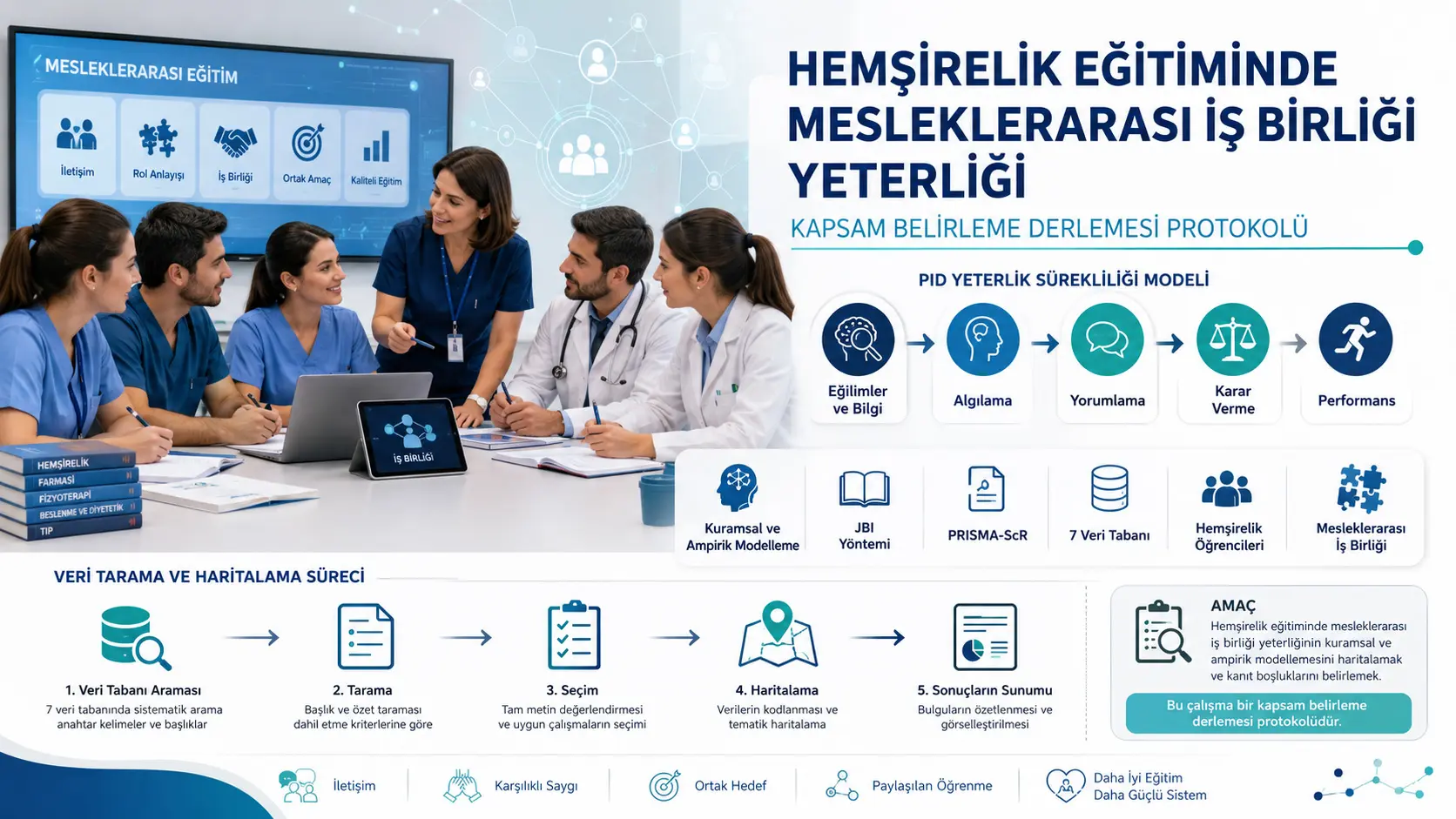
Huduma bora za afya si matokeo ambayo profession moja inaweza kuyazalisha peke yake. Hasa chronic diseases, aging population, multimorbidity, patient-safety risks, workforce shortages katika health systems na kuenea kwa digital-health technologies kunalazimisha professions tofauti kufanya kazi pamoja. Nurses, physicians, physiotherapists, pharmacists, social workers, care coordinators, informatics specialists na technical teams wanaweza kushughulikia sehemu tofauti za same care process. Kwa hiyo interprofessional collaboration katika health systems si good-will communication tu, bali ni basic condition ya kutoa huduma salama na endelevu.
Starting point ya study ni expanding need hii ya collaboration. Article inasisitiza umuhimu wa interprofessional collaboration kwa patient safety na health outcomes, huku ikionyesha digital transformation imepanua maana ya collaboration. Traditionally interprofessional collaboration imefikiriwa kama division of labor na teamwork kati ya health professionals. Lakini digital health systems, AI-supported clinical decision tools, electronic health records, remote monitoring technologies na hospital information systems zinahitaji nurses kufanya kazi na technical na digital professions pia. Hii inageuza collaboration kuwa broader multi-actor work au multi-institution coordination issue.
Kwa nursing education, development hii ni critical. Nursing students hawajifunzi professional knowledge na skills zao tu; lazima wajifunze kuwasiliana na professions nyingine, kufanya shared decisions kwa patient benefit, kutambua role boundaries, kubalance professional autonomy na team responsibility, na ku-initiate collaboration katika uncertain clinical situations. Skills hizi kwa pamoja huitwa interprofessional collaboration competence, yaani interprofessional collaboration competence.
Main problem ya article ni kwamba jinsi competence hii inavyomodeliwa katika research haiko clear vya kutosha. Kwa maneno mengine, researchers wanapochunguza interprofessional collaboration competence ya nursing students, wana-measure nini hasa? Attitudes? Motivation toward collaboration? Knowledge ya interprofessional communication? Ability ya perception na interpretation katika specific clinical scenario? Decision-making process? Au observable team behavior? Maswali haya ni muhimu kwa sababu kabla ya kusema “collaboration competence imeongezeka,” lazima tujue ni dimension gani imeongezeka.
Pengo ambalo study inalenga kujibu ni hili. Previous reviews na meta-analyses zinaweza kuwa zimefocus interprofessional education, simulation-based education, teamwork, communication au specific assessment tools. Lakini authors wa protocol wanasema hawakupata review katika major databases na registration platforms inayolenga directly theoretical conceptualization na operationalization ya interprofessional collaboration competence ya nursing students. Kwa hiyo proposed scoping review inalenga kumap studies si kwa topic tu, bali kwa jinsi zinavyoconceptualize competence.
Hapa sababu ya kuchagua scoping review inakuwa wazi. Scoping reviews hutumiwa kumap research structure, concepts, methods, gaps na evidence distribution katika field. Zinatofautiana na meta-analyses ambazo mara nyingi hucombine quantitatively effect ya particular intervention. Hapa swali ni zaidi “ni studies za aina gani zipo, concepts zinatumika vipi, na maeneo gani yamebaki underexplored?” badala ya “ni method gani most effective?” Protocol inatumia scoping-review design kwa sababu hii.
Theoretical backbone ya study ni kuona competence kama continuum. Authors wanatumia competence model ya Blömeke et al. Approach hii haioni competence kama binary split. Upande mmoja kuna relatively stable cognitive, affective na motivational dispositions za mtu. Upande mwingine kuna observable behavior au performance katika specific situation. Kati ya pande hizi kuna situation-specific cognitive processes: perception, interpretation na decision-making.
Relationship hii inaweza summarized conceptually hivi:
\[ \text{Eğilimler ve bilgi} \rightarrow \text{Algılama} \rightarrow \text{Yorumlama} \rightarrow \text{Karar verme} \rightarrow \text{Gözlenebilir performans} \]
Expression hii haijawasilishwa kama mathematical equation katika study; ni explanatory flow representation ya kufanya PID model iwe understandable. Katika model, perception ni kutambua, interpretation ni kutafsiri, na decision-making ni kufanya uamuzi. Processes hizi tatu zinaunganisha stable dispositions za mtu na observable real-world behavior.
Interprofessional collaboration competence ya nursing students ikifikiriwa kwa model hii, swali “student ana positive attitude toward teamwork?” pekee halitoshi. Je, student anatambua profession gani ina information gani katika clinical situation? Ana-perceive role boundaries na patient-safety risks? Ana-interpret uncertainty ndani ya team correctly? Anaamua lini na nani wa kuwasiliana naye? Anaweza kubadilisha decision kuwa real behavior? Maswali kama haya yanatoa deeper na process-based understanding ya competence.
Moja ya contributions muhimu za protocol ni kuchunguza studies zinalenga sehemu gani za competence continuum. Baadhi zinaweza ku-measure attitudes toward collaboration pekee. Nyingine zinaweza kutumia self-report questionnaires after simulation. Nyingine zinaweza code observable team behaviors. Nyingine zinaweza kuchunguza perception, interpretation na decision-making ya students katika specific clinical situations. Proposed review itamap focuses hizi ili kuona field iko strong wapi na ina gaps wapi.
Research question ya study imeelezwa wazi: Ni shortcomings zipi zinaonekana katika modeling ya interprofessional collaboration competence ya nursing students katika empirical research? Swali hili halihusu measurement-tool choice pekee. Pia linahusu theoretical conceptualization, operationalization of competence dimensions, study designs, contexts, theory use na research blind spots.
Ili kujibu swali hili, study inatumia PCC framework iliyopendekezwa na JBI. PCC ni initials za Population, Concept na Context. Katika protocol hii, population ni nursing students. Concept ni interprofessional collaboration competence across all dimensions of competence continuum. Context imewekwa broad, ikijumuisha higher education, vocational education, continuing education na other educational settings.
Inclusion criteria zimeundwa broadly. Protocol inapanga kuinclude qualitative, quantitative na mixed-method empirical studies; observational, experimental au longitudinal designs; na publication types kama journal articles na conference papers. Studies zenye full text in English or German zitazingatiwa. Hakuna geographic au publication-date restriction. Broad approach hii inaendana na mapping logic ya scoping review.
Lakini kuna limitations. Excluding publications outside English and German inaweza kukosa relevant studies na kusababisha geographic bias. Grey literature haitajumuishwa katika initial search. Researchers wanaeleza uamuzi huu kwa idea kwamba major academic databases zinaweza kukamata dominant research patterns in the scientific field. Ikiwa comprehensive electronic search itatoa very few eligible studies, grey literature itazingatiwa baadaye. Hii ni limitation muhimu inayotambuliwa na protocol yenyewe.
Search strategy ni broad. Basic search string inajumuisha collaboration terms kama interprofessional, multiprofessional, interdisciplinary, crossprofessional, transprofessional na crossdisciplinary; language variants kama collaboration, cooperation, collaborative na cooperative; competence/capacity terms kama competence, capacity, capability, ability na skill; pamoja na nurs* root. Wide term network hii imechaguliwa kwa sababu interprofessional collaboration concept inaweza kutumika inconsistently katika literature.
Seven planned databases na preliminary results ni striking. Scopus ilitoa 1.907, MEDLINE 1.654, Web of Science Core Collection 1.570, ProQuest 355, Education Source 194, Cochrane Library 77 na APA PsycArticles 3 records. Total kabla ya deduplication ilikuwa 5.776 records. Number hii si final included-study count; ni raw volume ya records generated by search strategy.
Distinction hii ni muhimu sana. Records 5.776 katika protocol haimaanishi “studies 5.776 zilianalyzed.” Records kwanza zitadeduplicate katika Zotero, kisha title/abstract screening na full-text assessment. Final included-study count itaripotiwa only after completion ya scoping review katika PRISMA flow diagram.
Study-selection process imepangwa katika stages mbili. First stage, two independent reviewers watascreen titles na abstracts. Second stage, full texts za potentially eligible studies zitapatikana na reevaluated against inclusion criteria. Kabla ya kila stage kutakuwa na pilot screening: 30 random records kwa title/abstract stage na 15 records kwa full-text stage. Pilot inasaidia reviewers kuelewa criteria the same way na kuongeza consistency.
Disagreements zitatatuliwa first by discussion. Kama consensus haipatikani, third independent researcher ataingia kama decision maker. Hii ni common quality-assurance approach katika systematic na scoping reviews. Results zitaonyeshwa kwa PRISMA flow diagram, ikionyesha transparently records found, excluded, full texts assessed na final included studies.
Katika data extraction, one researcher ataextract data na second researcher atacheck accuracy. Planned categories zinajumuisha authors and publication year, study design, study aim, population and sample size, country, educational context, focused competence dimensions, measurement instrument, qualitative findings related to modeling interprofessional collaboration competence na level of theory use.
Last category, level of theory use, ni one of distinctive features za protocol. Researchers wanapanga kutumia modified version ya “theory talk” scheme kutathmini how meaningfully theory is used in included studies. Scheme roughly inagawa theory use katika three levels: none/framework-only, low-level theory use na high-level theory use. Low-level use inaweza kuwa mention ya theory name au loose association. High-level use inaweza kuwa genuine application of theory au development of new theory.
Approach hii inaweza kufanya visible a common problem katika interprofessional collaboration competence research. Study inaweza kutumia concept ya “collaboration competence,” cite framework au use scale; lakini hiyo si proof ya deep theoretical modeling. Ikiwa components za competence, relationships zao, processes converting competence to performance na degree measurement represents model haziko clear, research inaweza kuwa theoretically weak.
Protocol inasema classical quality appraisal haitafanywa. Hii ni expected kwa scoping review, kwa sababu primary goal si ku-grade methodological quality ya evidence bali kumap research structure. Lakini study itachunguza level ya theory use despite not appraising methodological quality. Hii inaonyesha special emphasis on theoretical dimension for identifying research gaps.
Baada ya data analysis, results zitawasilishwa kwa tables, graphs, figures na narrative synthesis. Tables na graphs zitaonyesha scope, methods, contexts, competence dimensions na instruments za included studies. Narrative synthesis ita-link findings na research question na kujadili shortcomings katika modeling interprofessional collaboration competence ya nursing students.
Kile kinachoweza kuitwa “finding” katika study hii kwa sasa si results za completed review, bali planned methodological structure na rationale ya protocol. Kwa mfano, study haisemi bado “nursing students’ interprofessional collaboration competence modeled with these specific shortcomings,” kwa sababu result haijapatikana. Sahihi zaidi ni kwamba authors wana-suspect kwa prior research na literature observations kwamba shortcomings zinaweza kuwepo na wanatoa protocol ya kuzichunguza systematically.
Distinction hii ni muhimu kwa scientific integrity. Protocol studies zinaeleza plan ya future research; hazizalishi final results. Kwa hiyo reader hapaswi kusoma article kama completed systematic review au meta-analysis. Article inalenga kuongeza reliability ya future review kwa kufanya research question na method transparent.
Historical significance ya study ni attention kwa concepts kama “competence”, “skill”, “capacity” na “collaboration” ambazo kwa muda mrefu zinaweza kutumiwa too broadly katika interprofessional education research. Competence ikiwa poorly modeled, interpreting effects za educational interventions inakuwa difficult. Kwa mfano, student self-report score inaweza kuongezeka after simulation; lakini je, increase hii inatafsirika into collaboration behavior in actual clinical situation? Student amebadilisha attitude tu au perception na decision-making ability imeimprove? Questions hizi zinahitaji better conceptual models.
Today, study becomes even more important as health systems digitalize na collaboration networks expand. Nursing students wanahitaji kujiandaa kufanya kazi si katika traditional clinical team tu, bali na digital tools, hospital information systems, technical support teams na multi-institutional care chains. Kwa hiyo interprofessional collaboration competence ni broader kuliko “getting along with team.” Student lazima ajue information ipi inatoka profession gani, technological system ipi inaathiri workflow, na collaboration inapaswa kuanzishwa lini.
Kwa future, protocol suggests need ya stronger competence models in nursing-education research. Ikiwa review itaonyesha most studies ziko only at attitude/self-report level, future research inaweza ku-focus observable performance, situation-specific decision-making na realistic simulation behaviors. Ikiwa theory use ni weak, clearer theoretical models zitahitajika. Ikiwa contexts au education types fulani underrepresented, new studies zinaweza kulenga gaps hizo.
Kwa everyday healthcare, study ina indirect but important message. Lack of collaboration in patient care si issue ya professionals kutopendana au kutowasiliana tu. Which competences are taught during education, how they are measured, whether they translate to performance in specific situations na how students are prepared for real clinical complexity inaweza affect future patient safety. Kwa hiyo correct modeling ya interprofessional collaboration competence katika nursing education inaweza kujenga msingi wa safer na more coordinated care systems.
Strengths za study ni protocol preregistration, reliance on recognized guidelines kama JBI na PRISMA-ScR, broad database search plan, interdisciplinary search terms, two independent reviewers na third-adjudicator mechanism, predefined data-extraction categories, na separate analysis of theory use.
Limitations zimetajwa wazi. Excluding non-English and non-German publications inaweza kukosa studies kutoka baadhi ya countries. Grey literature haitajumuishwa initially, hivyo theses, reports na institutional documents zinaweza kuachwa first phase. By nature, scoping review haitafanya comprehensive methodological-quality assessment ya included studies. Hii itapunguza ability ya kutoa quantitative au definitive conclusion kuhusu strength ya evidence base.
Study inasema interprofessional collaboration competence ya nursing students ni central educational outcome kwa healthcare, lakini jinsi competence hii inavyoconceptualized na operationalized katika empirical research lazima imapwe systematically. Proposed scoping review inalenga kutambua research shortcomings kupitia PID model, competence-continuum approach na theory-use analysis.
Study haisemi bado specific shortcomings zipi definitivly zipo. Haiprove effectiveness ya a particular educational intervention. Haitoi final comparative result kuhusu students, curricula au measurement tools. Kwa sababu review haijakamilika, final number, characteristics na findings za included studies hazijaripotiwa.
Mbinu na Matokeo ya Utafiti
Study hii si completed empirical research wala completed review; ni scoping-review protocol. Kwa hiyo “method” section inaeleza jinsi future review itafanywa; “findings” si results zilizopatikana bado, bali planned outputs, preliminary search volume na methodological decisions.
| Study Component | How Defined in Protocol? | Scientific Meaning |
|---|---|---|
| Study type | Scoping-review protocol | Haizalishi new results; inaeleza method ya future review transparently. |
| Registration | Registered on Open Science Framework. | Preregistration huongeza methodological transparency na traceability ya research plan. |
| Methodological guidelines | JBI scoping-review method, PRISMA-P and PRISMA-ScR | Review inalenga kufanywa systematically, reportably na reproducibly. |
| Research question | Ni shortcomings zipi zinaonekana katika modeling interprofessional collaboration competence ya nursing students katika empirical research? | Focus ni conceptual and empirical modeling gaps zaidi kuliko intervention effects. |
| Theoretical framework | Competence-continuum approach and PID model | Competence inaonekana kama process from dispositions through perception, interpretation, decision-making to performance. |
| Population | Nursing students | Review inalenga collaboration competence katika nursing education. |
| Concept | Interprofessional collaboration competence and all dimensions of competence continuum | Sio attitudes au skills pekee, bali different theoretical levels za competence zitachunguzwa. |
| Context | All educational settings including higher education, vocational education, continuing education | Review haijabanwa kwa context moja na inalenga broad mapping. |
| Included studies | Qualitative, quantitative and mixed-method empirical studies; different designs and publication types | Broad evidence types zitazingatiwa according to scoping-review logic. |
| Language criterion | English and German full texts | Practical criterion lakini inaweza kuleta language na geographic bias. |
PCC structure ya protocol inaweza summarized hivi:
| PCC Element | Equivalent in This Protocol | Importance for Review |
|---|---|---|
| Population | Nursing students | Development of interprofessional collaboration competence during education will be examined. |
| Concept | Interprofessional collaboration competence within competence continuum | Studies will be mapped by which dimensions they conceptualize. |
| Context | Different educational settings and countries; no date limit | Field will be searched as broadly and inclusively as possible. |
Search strategy covers seven databases. Preliminary search results ni:
| Database | Interface / Coverage | Filtered Record Count | Interpretation |
|---|---|---|---|
| Scopus | 1974-2026 | 1.907 | Database yenye highest record count. |
| MEDLINE | 1985-2026 | 1.654 | One of main sources for health and medical literature. |
| Web of Science Core Collection | 1988-2026 | 1.570 | Used for interdisciplinary academic-literature search. |
| ProQuest | 1989-2026 | 355 | Supports education na social-science records. |
| Education Source | 1989-2026 | 194 | Helps capture education-science dimension of nursing education. |
| Cochrane Library | 2000-2026 | 77 | Complementary source for health-intervention literature. |
| APA PsycArticles | 1989-2024 | 3 | Produced limited psychology-literature records. |
| Total | Before deduplication | 5.776 | Not final included-study count; only raw search volume. |
Study-selection process imepangwa kwa steps hizi:
| Stage | Planned Application | Meaning for Reliability |
|---|---|---|
| Record transfer | All records transferred to Zotero and duplicates removed. | Prevents same study being assessed more than once. |
| Title/abstract screening | Two independent reviewers screen according to inclusion criteria. | Reduces single-reviewer bias. |
| Pilot title/abstract screening | Pilot screening using 30 random records. | Helps reviewers reach common understanding of criteria. |
| Full-text assessment | Full texts of potentially eligible studies assessed by two reviewers. | Final inclusion decision based on detailed evaluation. |
| Pilot full-text screening | Pilot with 15 records. | Improves consistency of full-text decisions. |
| Disagreement resolution | Discussion first, then third independent researcher if needed | Makes selection process more transparent and auditable. |
| Reporting | PRISMA flow diagram will be used. | Shows clearly how many records are excluded at each stage. |
Data-extraction tool inalenga kukusanya information critical to competence modeling pamoja na bibliographic data:
| Data Extraction Category | Content | Why Important? |
|---|---|---|
| Authors and publication year | Basic bibliographic information | Temporal development of field can be traced. |
| Study design | Qualitative, quantitative, mixed-method, experimental, observational etc. | Shows methods used to investigate interprofessional collaboration competence. |
| Aim | What the study assesses or investigates | Shows research context in which competence is used. |
| Population | Student group and sample size | Shows which other professional groups are studied with nursing students. |
| Context | Country and educational setting | Cultural and institutional-context differences can be mapped. |
| Focused competence dimensions | Dimensions addressed from PID and competence-continuum perspectives | Blind spots in competence modeling can be identified. |
| Measurement instrument | Questionnaire, scale, observation tool or assessment method | Shows how competence is operationalized. |
| Qualitative findings | Qualitative results related to modeling interprofessional collaboration competence | Allows conceptual details not captured by quantitative measures. |
| Level of theory use | None/low/high theory-use classification | Allows examination of theoretical depth and gaps. |
Theory-use assessment ni one of protocol’s most distinctive methodological elements:
| Level of Theory Use | Approximate Meaning | Importance for Interprofessional Collaboration Competence Research |
|---|---|---|
| None or framework-only | Study does not meaningfully link to theory or only references a broad framework. | Competence may be measured but why/how it works may remain unclear. |
| Low theory use | Theory name mentioned or loosely linked. | Theoretical language exists, but measurement and interpretation may not rely on deep theoretical structure. |
| High theory use | Theory genuinely applied or new theory developed. | Can establish stronger explanation between competence dimensions, processes and observable performance. |
Planned analysis and presentation outputs ni hizi:
| Planned Output | What Will It Show? | Value for Reader |
|---|---|---|
| PRISMA flow diagram | Identification, screening, exclusion and inclusion of records | Provides transparency of review process. |
| Evidence tables | Characteristics, contexts and methods of included studies | Provides organized and comparative view of field. |
| Graphs and figures | Distribution of competence dimensions, study designs or contexts | Makes concentrations and gaps easier to see. |
| Narrative synthesis | Links modeling shortcomings to research question | Provides conceptual interpretation beyond numbers. |
| OSF data sharing | Sharing database metadata files in RIS format | Supports transparency and reproducibility. |
Methodological logic ya protocol inalenga kuzuia superficial use ya concepts katika nursing-education research. Interprofessional collaboration competence ikipimwa only kwa general attitude scales, inaweza kubaki unclear jinsi student anavyoperceive, interpret, decide na behave katika actual clinical situation. Proposed review therefore inalenga kuchunguza competence research si by outcomes tu, bali by theoretical layers addressed.
Kwa sababu protocol bado haina empirical results, most accurate finding ni hii: researchers wanatoa open, registered na theoretically grounded review plan ya kumap literature systematically kuhusu modeling interprofessional collaboration competence in nursing students. Final shortcomings zinaweza reported only after scoping review completed.
Maelezo ya Chanzo na Mbinu
Makala hii imetayarishwa kwa msingi wa utafiti wa Aldin Striković, Eveline Wittmann, Johannes Krell na Ferdinand Osterhammer wenye kichwa “Shortcomings of modeling interprofessional collaboration competence in nurse education: A protocol for a scoping review of empirical research”.
Source text ni preprint scoping-review protocol. Ina statement wazi “This preprint research paper has not been peer reviewed”. Kwa hiyo study haijapitia peer review. Text haijaripoti results za completed scoping review; inaeleza research question, theoretical framework, inclusion criteria, search strategy, study selection, data extraction plan na analysis approach ya future review.
Study si new clinical research, patient-data analysis, nursing-education intervention, simulation-education trial wala completed systematic review. Kwa hiyo protocol hii haiwezi kutuambia current level ya nursing students’ interprofessional collaboration competence, educational method gani most effective, au measurement tool gani best.
Hakuna result, effect claim au completed-review finding isiyo kwenye PDF iliyoongezwa. Record count ya 5.776 ni raw preliminary-search count across seven databases before duplicate removal; si final included-study count. Final included studies, characteristics na research gaps zitaripotiwa only after review completed.
Strengths za study ni OSF registration, adherence to JBI and PRISMA-ScR methodological guidelines, broad database search, interdisciplinary search terms, two independent reviewers, pilot screening plan, structured data-extraction tool na separate theory-use analysis.
Limitations ni exclusion of publications outside English and German, grey literature not included in initial search, lack of comprehensive methodological-quality appraisal inherent to scoping-review design, na protocol not yet producing results. Kwa hiyo article inapaswa kusomwa kama method plan ya jinsi evidence itamapwa systematically, si final evidence about field.
Acha maoni
Anwani yako ya barua pepe haitachapishwa. Sehemu za lazima zimewekewa alama ya *