

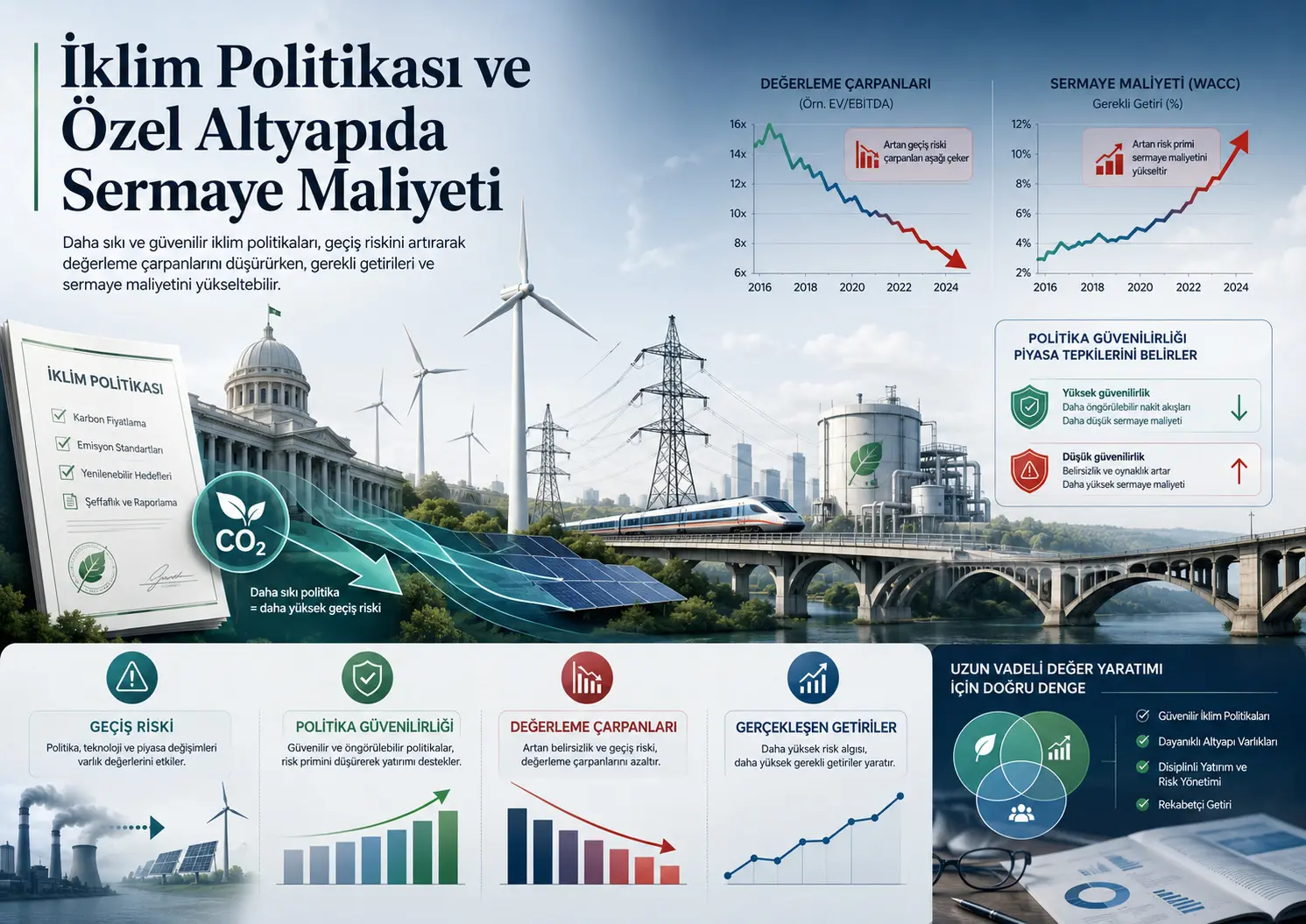
Ин таҳқиқот меомӯзад, ки сиёсати сахттари иқлимӣ бо арзёбии дороиҳои инфрасохтории хусусӣ ва дар биржа савдонешаванда ва бо даромадҳои воқеии сармоягузорон чӣ гуна алоқаманд аст. Саволи асосии таҳқиқот ин аст, ки оё сиёсатҳои иқлимӣ, ба монанди нархгузории карбон, стандартҳои экологӣ, ҳавасмандгардонӣ ва қоидаҳои тадриҷан бастани фаъолият, на танҳо даромади лоиҳаҳои инфрасохториро, балки меъёри тахфифе, ки ба ин лоиҳаҳо татбиқ мешавад ва аз ин рӯ арзиши сармояро низ тағйир медиҳанд.
Муҳаққиқон 871 ширкати мақсадноки махсусро, ки дар 25 кишвар фаъолият мекунанд ва дар пойгоҳи додаҳои EDHECinfra ҷой доранд, омӯхтанд. Маҷмӯи додаҳо соҳаҳое мисли нақлиёт, энергияи барқароршаванда, истеҳсоли анъанавии нерӯи барқ, хизматрасониҳои шабакавӣ, инфрасохтори иҷтимоӣ, захираҳои энергетикӣ, хизматрасониҳои экологӣ ва инфрасохтори додаҳоро фаро мегирад. Давраи асосии додаҳо 1999–2024 муайян шуда, таҳлилҳои регрессия барои давраи 2000–2023, ки дар он тағйирёбандаҳои иқлимӣ ва молиявӣ якҷо дастрасанд, анҷом дода шудаанд.
Дар таҳқиқот ду тағйирёбандаи натиҷавии ҷудогона истифода шудааст. Якум, multiple-и valuation-и EV/Revenue мебошад, яъне нисбати enterprise value-и дороии инфрасохторӣ ба даромади солонаи он. Дуюм, realized annual return аст, ки аз тағйир дар net asset value ва тақсимоти пардохтшуда ба сармоягузорон сохта шудааст. Ҳамин тавр кӯшиш шудааст, ки reflection-и пешакии climate risk дар valuation аз adjustments-е, ки policy changes-и ғайричашмдошт баъдтар дар returns ба вуҷуд меоранд, ҷудо карда шавад.
Дар basic valuation regression coefficient-и climate-policy stringency −0,430 буда, аз ҷиҳати оморӣ significant аст. Муҳаққиқон ин натиҷаро чунин тафсир кардаанд, ки stricter climate policies бо lower EV/Revenue multiples алоқаманданд. Economic mechanism ин аст, ки investors аз infrastructure assets-и дорои regulatory risk higher return талаб мекунанд ва future cash flows-ро бо higher discount rate арзёбӣ мекунанд.
Дар realized-return regression coefficient-и annual change дар climate-policy stringency −0,187 аст. Афзоиши як standard deviation дар policy variable бо тақрибан 0,018 inverse-hyperbolic-sine unit ё мувофиқи approximate interpretation-и таҳқиқот бо negative adjustment-и 1,9 percentage points дар annual return алоқаманд аст. Ин натиҷа нишон медиҳад, ки policy tightening-и пешгӯинашуда метавонад баъдан дар private-infrastructure valuations downward revision ба вуҷуд оварад.
Дар муқобил, coefficient-и annual country-level temperature anomalies бар valuation аз ҷиҳати оморӣ significant нест. Дар realized returns бошад relationship-и negative ва танҳо limited significance дида шудааст. Муҳаққиқон ин weak result-ро ба он рабт додаанд, ки country-average temperature anomalies physical hazards-и project-location-specific мисли flood, storm, drought ва extreme heat-ро ба қадри кофӣ намояндагӣ намекунанд.
Яке аз findings-и муҳимтарини таҳқиқот нақши policy credibility аст. Policies-и implemented, persistent ва аз ҷониби investors binding ҳисобшуда дар current valuations қавитар reflection меёбанд. Дар муҳитҳое, ки policy framework камтар predictable аст, surprise component-и regulatory changes калонтар мешавад ва дар realized returns stronger adjustments пайдо шуда метавонанд.
Пеш аз Paris Agreement marginal effect-и policy tightening бар realized returns −0,235 гузориш шудааст, дар ҳоле ки баъд аз agreement total marginal effect ба тақрибан 0,043 наздик шудааст. Ин result interpretation-ро дастгирӣ мекунад, ки пас аз 2015 investor expectations бештар anchored шуда метавонанд ва new policy steps surprises-и камтар ба вуҷуд меоранд.
Asset characteristics низ results-ро тағйир додаанд. Projects дар development stage نسبت ба operating projects stronger valuation ва return responses нишон додаанд. Assets-и exposed to punitive regulations ва transition assets valuation discounts-и калонтар аз neutral assets доштанд. Бо вуҷуди ин, дар баъзе supplementary tables interaction coefficients ҳамчун total marginal effect тафсир шудаанд, аз ин рӯ realized-return results барои transition, grey ва green assets бояд бо эҳтиёт хонда шаванд.
Таҳқиқот cost of capital-ро бевосита мушоҳида намекунад. Weighted average cost of capital, debt interest ё cost of equity алоҳида чен нашудаанд. Increase дар cost of capital як economic interpretation аст, ки аз decline-и valuation multiples бо stricter policies хулоса шудааст. Аз ин рӯ findings нишон медиҳанд, ки valuations ба шакле тағйир меёбанд, ки бо higher required returns мувофиқ аст; онҳо дақиқ нишон намедиҳанд, ки climate policy cost of capital-ро чӣ қадар зиёд мекунад.
Таҳқиқот аз peer review нагузаштааст. Infrastructure data-и истифодашуда proprietary мебошанд; sample асосан дар OECD economies мутамарказ аст ва large infrastructure markets мисли China, Japan, South Korea ва India дар main sample нестанд. Илова бар ин, observational panel regressions relationship байни policy ва valuation-ро нишон медиҳанд, вале ба танҳоӣ definitive causality evidence намедиҳанд.
Саволи асосии таҳқиқот чист?
Барои амалӣ шудани energy transition, миқдори зиёди private capital бояд ба long-lived infrastructure мисли power-generation facilities, grids, storage systems, transport networks ва environmental services равона шавад. Аммо ҳамин infrastructure assets аз ҷумлаи investments-е мебошанд, ки аз climate policies бештар таъсир мегиранд.
Carbon tax ё emissions-trading system метавонад operating cost-и carbon-intensive facility-ро зиёд кунад. Environmental standards метавонанд additional investment талаб кунанд. Regulations барои phase-out-и fossil-fuel assets метавонанд remaining economic life-ро кӯтоҳ кунанд. Renewable-energy incentives бошанд метавонанд ба supported assets revenue certainty диҳанд.
Аз ин рӯ таҳқиқот ба саволҳои зерин ҷавоб меҷӯяд:
- Вақте climate policy сахттар мешавад, private-infrastructure valuation multiples паст мешаванд?
- Unexpected policy tightening баъдтар дар investors’ realized returns adjustment ба вуҷуд меорад?
- Policy credibility вақти pricing шудани risk-ро тағйир медиҳад?
- Projects дар development ва operating stages ба як андоза таъсир мегиранд?
- Оё байни regulated, contracted ва market-price-exposed revenue models фарқ ҳаст?
- Оё supported, penalized, transition, brown, grey ва green infrastructure responses-и гуногун доранд?
- Оё physical climate risk ва policy-driven transition risk тавассути same channels кор мекунанд?
Чаро private infrastructure markets фарқ мекунанд?
Share price-и public company дар trading hours пайваста нав мешавад. Аммо private infrastructure assets кам-кам даст ба даст мешаванд. Valuations асосан тавассути financial models, expert appraisals, net asset value updates ва limited observed transactions анҷом дода мешаванд.
Ин хусусият ду consequence-и муҳим дорад:
- New climate-policy information метавонад фавран ба prices ворид нашавад.
- Rare valuation updates метавонанд realized returns-ро аз воқеият ҳамвортар нишон диҳанд.
Таҳқиқот ин фарқро ҳамчун “risk priced in advance” ва “subsequent realized price adjustment” баррасӣ мекунад. Агар policy change пешакӣ expected бошад, effect-и он дар valuation level дида шуданаш, агар surprise бошад, additional adjustment дар realized return пайдо шуданаш интизор аст.
Муносибати байни cost of capital ва valuation
Present value-и infrastructure asset ба discount кардани future expected cash flows бо required return-и investor алоқаманд аст:
\[ V_0=\sum_{t=1}^{T}\frac{E(CF_t)}{(1+r)^t} \]
Дар ин ҷо:
- V0: Present value-и asset мебошад.
- E(CFt): Expected cash flow дар period t мебошад.
- r: Required return ё discount rate мебошад.
- T: Assessed economic life-и asset мебошад.
Ин equation structural model-и мустақиман estimated-и таҳқиқот нест; он basic financial relationship аст, ки барои шарҳи valuation finding истифода мешавад. Агар expected cash flows unchanged бошанд ва r боло равад, present value паст мешавад. Аз ин рӯ lower EV/Revenue multiple, бо assumption-и other conditions equal, бо higher required return ва higher cost of capital мувофиқ аст.
Аммо valuation multiple танҳо аз discount rate таъсир намегирад. Future revenues, growth expectations, profit margins, tax burden ва remaining life-и asset низ multiple-ро тағйир дода метавонанд. Аз ин рӯ таҳқиқот finding-ро на ҳамчун definitive measurement of cost of capital, балки ҳамчун result-и асосан consistent with discount-rate channel тафсир мекунад.
Кадом literature gap ҳадаф гирифта шудааст?
Literature-и васеъ вуҷуд дорад, ки effect-и climate risk-ро ба public-company shares, bonds ва real-estate values меомӯзад. Аммо дар private infrastructure markets project-level valuations ва realized returns асосан public нестанд.
Gap-и ҳадафгирифтаи таҳқиқот аз се қисм иборат аст:
- Direct examination-и effect-и climate policy ба private-infrastructure valuation multiples
- Separating valuation level ва realized-return adjustment дар same dataset
- Нишон додани он, ки policy credibility ва asset characteristics ин ду channel-ро чӣ гуна тағйир медиҳанд
Ин approach имкон медиҳад transition risk на танҳо бо саволи “asset prices паст мешаванд?” балки бо саволи “risk пешакӣ priced мешавад ё баъди policy change ба prices ворид мешавад?” омӯзонда шавад.
Доираи EDHECinfra dataset
Main data source-и таҳқиқот EDHECinfra database мебошад, ки transaction ва financial information-и privately held infrastructure projects-ро дар бар мегирад. Main unit of analysis special-purpose company мебошад, ки single infrastructure project-ро соҳибӣ ё finance мекунад.
| Data property | Scope reported дар таҳқиқот |
|---|---|
| Number of special-purpose companies | 871 SPV |
| Number of countries | 25 |
| Number of transactions | More than 800 |
| Broad data period | 1999–2024 |
| Main regression period | 2000–2023 |
| Valuation-regression observations | 8.628 |
| Return-regression observations | 8.218 |
Data аз combination-и investor surveys, regulatory filings ва asset-finance documents сохта шудаанд. Transaction prices ҳамчун reference points барои aligning reported net asset values with market conditions истифода шудаанд.
Азбаски барои same asset annual, semiannual ё quarterly records буда метавонанд, observation counts дар Table 1 аз unique asset-year count зиёдтаранд. Missing variables imputed нашудаанд; observations without required information for a given regression хориҷ карда шудаанд.
Figure A1 ва A2: Намуди sample
Left panel-и Figure A1 дар page 37-и PDF business models-ро нишон медиҳад. Аз graph тақрибан:
- Contracted projects бо тақрибан 530 assets largest group мебошанд.
- Merchant projects exposed to market prices тақрибан 200 assets мебошанд.
- Regulated projects бо тақрибан 120 assets smaller group мебошанд.
Дар sector panel-и same figure transport бо тақрибан 250 assets largest sector аст. Renewable power generation бо тақрибан 210 assets дуюм ва non-renewable power generation бо тақрибан 125 assets сеюм аст. Network utilities, social infrastructure, energy resources, environmental services ва data infrastructure smaller groups мебошанд.
Figure A2 нишон медиҳад, ки number of assets дар sample аз тақрибан 160 дар 1999 то тақрибан 750–770 дар period-и 2015–2021 зиёд шудааст. Decline дар 2023 ва 2024 columns метавонад ҳам аз actual market contraction ва ҳам аз incomplete coverage дар end of data period бошад; таҳқиқот ин ду possibility-ро алоҳида ҷудо накардааст.
Climate Policy Stringency Index чӣ гуна сохта шудааст?
Transition risk бо country-year level Climate Policy Stringency Index чен шудааст. Index properties-и active policies-ро мисли instrument type, implementation status, sector coverage, geographic coverage ва authority level якҷо мекунад.
Basic equation чунин аст:
\[ CPSI_{c,t}=\ln\left(1+\sum_{p\in P_{c,t}}S_p\right) \]
Дар ин ҷо:
- CPSIc,t: Climate-policy stringency-и country c дар year t мебошад.
- Pc,t: Set of climate policies active in relevant country and year мебошад.
- Sp: Standardized score-и ҳар policy мебошад.
- Log transform имкон медиҳад, ки бо зиёд шудани policy count ҳар additional policy marginal contribution-и хурдтар ба index диҳад.
Барои European Union countries ҳам national ва ҳам EU-level policies дохил шудаанд. Гуфта шудааст, ки EU policies барои advanced economies full weight ва барои transition economies partial weight мегиранд.
Source-consistency warning: Матн мегӯяд, ки index аз Climate Policy Database data сохта шудааст, дар ҳоле ки footnote ба Climate Change Performance Index download page меравад. Climate Policy Database ва Climate Change Performance Index як data product нестанд. Азбаски raw policy file ва code барои reconstruct кардани index дар main PDF shared нашудаанд, exact data origin-и CPSI мустақилона verify карда намешавад.
Figure A3: Climate-policy stringency дар вақт чӣ гуна тағйир ёфтааст?
Box plots дар page 39 нишон медиҳанд, ки distribution-и CPSI дар 25 countries бо вақт upward shift кардааст. Аз graph тақрибан median value дар 1999 2,5, дар 2005 3,8, дар 2015 4,6 ва дар 2024 5,0 мебошад.
Дар second panel-и same page average policy stringency барои Annex I countries тамоми period аз Non-Annex countries баландтар аст. Дар Annex I transition economies around 2005 jump-и назаррас дида мешавад.
Дар G20 comparison-и page 40 CPSI value-и G20 countries тамоми period аз non-G20 countries баландтар аст. Гарчанде gap байни groups бо вақт кам мешавад, дар 2024 пурра баста нашудааст.
Physical climate risk чӣ гуна чен шудааст?
Барои physical climate risk annual country-level temperature anomalies аз Berkeley Earth истифода шудаанд. Ҳар infrastructure asset бо temperature anomaly-и same country ва same year matched шудааст.
Дар Table 1 mean temperature anomaly 1,248 °C ва standard deviation 0,507 °C дода шудааст. Values аз −0,822 °C то 3,469 °C фарқ мекунанд.
Ин variable long-term warming ва broad climate change-ро инъикос карда метавонад. Аммо project-level hazards-и зеринро бевосита намеченад:
- Flood depth ё flood probability
- Storm, hurricane ва wind intensity
- Drought duration ва water scarcity
- Proximity to wildfire
- Sea-level rise
- Physical resilience ва adaptation investment-и project
Ин measurement limitation яке аз possible reasons мебошад, ки physical-risk coefficients аз transition-risk coefficients заифтар шудаанд.
Dependent variable 1: EV/Revenue valuation multiple
Enterprise value ҳамчун sum-и market value of equity ва net debt таъриф шудааст:
[ EV=Equity\ Value+Net\ Debt ]
Valuation variable natural logarithm-и ratio of enterprise value to annual revenue мебошад:
\[ Valuation_{i,t}=\ln\left(\frac{EV_{i,t}}{Revenue_{i,t}}\right) \]
Азбаски EV ҳам debt ва ҳам equity value-ро дар бар мегирад, барои comparison-и projects бо different financing structures нисбат ба equity value alone measure-и neutralтар медиҳад.
Bottom ва top %1 portions-и dependent-variable distribution winsorized шудаанд, то outlier effect кам шавад. Дар Table 1 mean log EV/Revenue 1,951, median 1,871 ва standard deviation 1,020 мебошад.
Dependent variable 2: Realized return
Realized total return аз change in net asset value ва distributions to investor сохта шудааст:
\[ R_{i,t}=\frac{NAV_{i,t}-NAV_{i,t-1}+Distribution_{i,t}}{NAV_{i,t-1}} \]
Ин explanatory equation return definition-и дар text додашударо нишон медиҳад. Барои кам кардани skewness ва effect-и extreme values inverse hyperbolic sine transform ба return татбиқ шудааст:
\[ asinh(R)=\ln\left(R+\sqrt{R^2+1}\right) \]
Asinh transform ба log advantage дорад, зеро zero ва negative values-ро нигоҳ медорад. Аммо interpretation-и regression coefficient ҳамчун direct percentage change, хусусан барои large values, эҳтиёт талаб мекунад.
Control variables
| Тағйирёбанда | Таъриф | Нақш дар model |
|---|---|---|
| Size | Natural logarithm-и total assets | Scale ва institutional maturity |
| Profitability | EBIT/revenue | Operating performance |
| Leverage | Net liabilities/total assets | Sensitivity ба debt financing |
| Revenue growth | Annual revenue change | Demand ва investment dynamics |
| Term spread | Difference between long- and short-term government bond yields | Discount rate барои long-lived assets |
| Credit spread | Difference between risky borrowing and risk-free benchmark | Financing ва default conditions |
Дар Table 1 term ва credit spreads ҳамчун “bp” label шудаанд. Аммо values мисли mean 1,130 ва 0,942 ва range-и −10,553–8,301 ишора мекунанд, ки variables мумкин аст ба percentage points, на basis points, сабт шуда бошанд. Азбаски main text unit conversion-ро шарҳ намедиҳад, ин field unit ambiguity дорад.
Basic valuation model
Valuation model-и таҳқиқот дар simplified form чунин аст:
\[ \ln(EV/Rev)_{i,t}=\alpha+\beta_1TR_{c(i),t-1}+\beta_2PR_{c(i),t}+\beta_3Macro_{c(i),t}+\beta_4Firm_{i,t-1}+FE+\varepsilon_{i,t} \]
Дар ин ҷо:
- TR: One-year-lagged climate-policy stringency.
- PR: Same-year temperature anomaly.
- Macro: Term spread, credit spread ва leverage interactions-ро дар бар мегирад.
- Firm: Lagged size, profitability ва revenue growth-ро дар бар мегирад.
- FE: Country, sector ва year fixed effects, инчунин project-stage ва business-model indicators.
Standard errors дар country ва year levels two-way clustered шудаанд. Ҳамин тавр кӯшиш шудааст common error structure байни assets дар same country ва global shocks across years ба назар гирифта шаванд.
Basic return model
Realized-return model ба ҷойи levels changes-ро истифода мебарад:
\[ ARR_{i,t}=\alpha+\beta_1\Delta TR_{c(i),t-1}+\beta_2PR_{c(i),t}+\beta_3\Delta Macro_{c(i),t}+\beta_4Firm_{i,t-1}+FE+\varepsilon_{i,t} \]
Истифодаи annual change ба ҷойи level-и policy stringency ба assumption асос ёфтааст, ки returns бештар ба unexpected policy shocks, на ба already-known policy level, вокуниш мекунанд.
Чаро policy variables lagged истифода шудаанд?
Policy stringency ва firm variables ба model бо one-year lag дохил шудаанд. Ин choice мақсад дорад:
- Барои policy reflected шудан дар financial statements ва investor expectations вақт диҳад,
- Reverse causality-и шакли current valuations determining same-year policy measurement-ро кам кунад,
- Financial-reporting lags-ро ба назар гирад
.
Бо вуҷуди ин, one-year lag policy endogeneity-ро пурра ҳал намекунад. Governments метавонанд climate policies-ро ҳамзамон ҳамчун response ба changes in economic growth, energy prices, public finances ё investment conditions низ тағйир диҳанд.
Basic valuation results
| Тағйирёбанда | Coefficient | t-statistic | Significance |
|---|---|---|---|
| Policy stringency, t−1 | −0,430 | 3,35 | %1 |
| Temperature anomaly | −0,022 | 1,11 | Not significant |
| Term spread | −0,024 | 1,90 | %10 |
| Credit spread | −0,122 | 2,96 | %1 |
| Credit spread × leverage | 0,150 | 3,00 | %1 |
| Size | 0,078 | 3,28 | %1 |
| Profitability | 0,413 | 5,15 | %1 |
| Revenue growth | 2,096 | 3,71 | %1 |
| Operating project | −0,323 | 2,47 | %5 |
Model 8.628 observations дорад ва adjusted R² 0,369 мебошад. Larger, more profitable ва faster-growing-revenue assets higher valuation multiples доранд. Operating projects нисбат ба development-stage projects lower valuation multiples доранд; ин бо limited growth options-и mature projects шарҳ дода шудааст.
Оё “%7 decline барои one standard deviation” reproduce мешавад?
Матн гузориш мекунад, ки one-standard-deviation increase дар policy stringency бо тақрибан %7 decline дар valuation multiples алоқаманд аст. Аммо tables values-и зеринро медиҳанд:
- Policy-stringency standard deviation: 1,189
- Regression coefficient: −0,430
Direct coefficient product:
\[ -0,430\times1,189=-0,511 \]
Азбаски dependent variable logarithmic аст, exact percentage conversion:
\[ 100\times(e^{-0,511}-1)\approx-40,0\% \]
Simple linear approximation бошад тақрибан −%51 result медиҳад. Ҳарду calculation ба −%7 interpretation-и text намерасанд.
Дар бораи он ки policy variable пеш аз regression additionally standardized шудааст ё coefficient дар scale-и дигар report шудааст, explanation-и равшан нест. Аз ин рӯ economic magnitude-и “%7” дар таҳқиқот аз current tables ва definitions independently reproduce карда намешавад. Result-и боэътимод ин аст, ки policy-stringency coefficient negative ва statistically significant мебошад.
Sign problem дар interpretation-и credit spread ва leverage
Marginal effect-и credit spread бояд чунин ҳисоб шавад:
\[ \frac{\partial Valuation}{\partial CreditSpread}=-0,122+0,150\times Leverage \]
Positive будани interaction coefficient mathematically маъно дорад, ки бо баланд шудани leverage negative basic effect-и credit spread less negative мешавад. Ҳангоми истифодаи average leverage 0,751:
\[ -0,122+(0,150\times0,751)\approx-0,009 \]
Мақола positive interaction coefficient-ро ҳамчун stronger effect of financing shock in high-leverage assets тафсир мекунад. Аммо coefficient signs-и linear model-и истифода шуда ин “amplification” interpretation-ро бевосита дастгирӣ намекунанд. Барои economic interpretation-и interaction, scale-и leverage variable ва marginal-effect graphs лозиманд.
Basic realized-return results
| Тағйирёбанда | Coefficient | t-statistic | Significance |
|---|---|---|---|
| Change in policy stringency, t−1 | −0,187 | 2,52 | %5 |
| Temperature anomaly | −0,025 | 1,94 | %10 |
| Change in term spread | −0,067 | 8,30 | %1 |
| Change in credit spread | −0,029 | 2,76 | %5 |
| Credit-spread change × leverage | −0,042 | 1,65 | %10 |
| Leverage | 0,032 | 1,94 | %10 |
| Revenue growth | 0,519 | 5,48 | %1 |
Model 8.218 observations дорад ва adjusted R² 0,185 аст. Policy shocks, increase in term spread ва tightening of credit conditions бо realized returns negative relationship доранд. Revenue growth бошад strong positive coefficient дорад.
Approximate %1,9 decline дар return чӣ гуна ҳисоб шудааст?
Standard deviation-и policy change 0,095 ва regression coefficient −0,187 аст:
\[ -0,187\times0,095=-0,0178 \]
Ин value дар asinh-transformed return variable тақрибан −0,018 unit change-ро ифода мекунад. Азбаски asinh transform дар small values ба linear value наздик аст, таҳқиқот инро тақрибан 1,9 percentage-point decline дар return тафсир кардааст.
Ин calculation, бар хилофи %7 interpretation дар valuation model, бо table values тақрибан мувофиқ аст. Бо вуҷуди ин, азбаски dependent variable asinh-transformed аст, exact percentage interpretation метавонад аз observation-level initial return таъсир гирад.
Policy credibility чӣ гуна чен шудааст?
Таҳқиқот single credibility index насохтааст; effect-и policy stringency-ро бо чор separate institutional indicator condition кардааст:
| Credibility dimension | Indicator-и истифодашуда |
|---|---|
| International commitment | UNFCCC Annex I, Annex I transition economy ва Non-Annex classification |
| Long-term structural credibility | High, medium ва low ranking мувофиқи average policy stringency дар 2005–2014 |
| Implementation credibility | Share of actually implemented policies among policies in force |
| Global expectation shift | Before and after 2015 Paris Agreement |
Valuation results by UNFCCC classification
| Country group | Marginal effect-и policy stringency on valuation |
|---|---|
| Non-Annex | −0,435 |
| Annex I | −0,446 |
| Annex I transition economies | −2,157 |
Largest negative valuation relationship дар Annex I transition economies дида шудааст. Муҳаққиқон инро ба higher compliance costs вобаста кардаанд, ки аз coexistence-и binding policy commitments ва less mature institutional environment бармеоянд.
Аммо дар Table A4 t-statistics-и дар назди marginal effects-и Annex I ва Annex I-EiT нишон додашуда ба назар мерасад, ки t-statistics-и interaction coefficients мебошанд, на total marginal effect. Standard errors calculated by delta method барои total marginal effect дода нашудаанд.
Share of implemented policies
| Implementation level | Valuation marginal effect |
|---|---|
| 10 percentile | 1,216 |
| Median | 0,415 |
| 90 percentile | −0,386 |
Дар environments, ки policies асосан танҳо announced, вале not implemented мебошанд, policy stringency метавонад positive valuation relationship нишон диҳад. Бо баланд шудани implementation share effect negative мешавад. Таҳқиқот инро чунин шарҳ медиҳад, ки investors non-binding policy announcements-ро low-cost мебинанд, вале implemented policies-ро ҳамчун real compliance obligation price мекунанд.
Long-term policy ranking
| Country group | Valuation marginal effect |
|---|---|
| Medium ranking | −0,714 |
| High ranking | −0,555 |
| Low ranking | −0,493 |
Largest valuation discount дар medium group аст. Муҳаққиқон пешниҳод мекунанд, ки countries бо persistent strong policy ва countries бо persistently low policy метавонанд predictableтар бошанд, дар ҳоле ки uncertain direction дар medium group larger pricing discount эҷод мекунад.
Before and after Paris Agreement
| Period | Valuation marginal effect | Return marginal effect |
|---|---|---|
| Pre-Paris | −0,462 | −0,235 |
| Post-Paris | −0,485 | 0,043 |
Return result бо interpretation мувофиқ аст, ки policy shocks post-Paris ба ҳисоби миёна less negative surprise ба вуҷуд оварданд. Аммо барои valuation result text мегӯяд “post-Paris marginal effect −0,023 and small”. −0,023 post-Paris interaction coefficient аст:
[ -0,462+(-0,023)=-0,485 ]
Аз ин рӯ total post-Paris valuation effect small нест, балки аз basic effect каме more negative аст. Channel-е, ки post-Paris заиф шудааст, valuation не, балки realized-return adjustment мебошад:
[ -0,235+0,278=0,043 ]
General mechanism-и policy credibility
Вақте results якҷо баррасӣ мешаванд, timing mechanism-и зерин пешниҳод мешавад:
- Вақте policy credible ва implementable аст, investors future costs-ро пешакӣ ба ҳисоб мегиранд.
- Risk барвақттар дар current valuation multiple-и asset reflection меёбад.
- Вақте policy баъдтар effective мешавад, surprise хурдтар аст.
- Аз ин рӯ additional correction дар realized return маҳдуд мешавад.
- Вақте policy uncertain аст, investors announcement-ро пурра price намекунанд.
- Вақте unexpected implementation ё tightening рух медиҳад, larger return correction пайдо шуда метавонад.
Effects by project stage
| Project stage | Valuation marginal effect | Return marginal effect |
|---|---|---|
| Development stage | −0,498 | −0,588 |
| Operating | −0,422 | −0,179 |
Projects дар development stage ҳанӯз permit, construction, financing ва start-of-revenue risks доранд. Азбаски policy change метавонад capital expenditure, technology choice ё project approval-ро тағйир диҳад, stronger sensitivity-и ин assets economically consistent аст.
Effects by business model
| Business model | Valuation marginal effect | Return marginal effect |
|---|---|---|
| Regulated | −0,396 | −0,344 |
| Merchant | −0,373 | −0,163 |
| Contracted | −0,456 | −0,158 |
Мақола return interaction coefficients-и merchant ва contracted assets-ро мутаносибан 0,181 ва 0,186 ҳамчун “positive response” таъриф мекунад. Аммо инҳо differences relative to −0,344 basic effect-и regulated assets мебошанд. Total effects мутаносибан −0,163 ва −0,158 мебошанд; яъне less negative аз basic group, вале positive нестанд.
Effects by policy channel
| Policy class | Valuation marginal effect | Return marginal effect: by summing coefficients |
|---|---|---|
| Neutral | −0,318 | −0,201 |
| Support | −0,395 | −0,275 |
| Penalty | −0,525 | −0,212 |
| Transition | −0,497 | Approximately 0,041 |
Барои transition assets basic coefficient дар return regression −0,201 ва interaction coefficient 0,242 аст. Зери standard interaction model total marginal effect бояд:
[ -0,201+0,242=0,041 ]
бошад. Аммо Table A7 ва main text total effect-ро 0,242 медиҳанд. Аз ин рӯ magnitude-и positive return response-и transition assets дар document inconsistent аст. Мувофиқи regression equation тақрибан 0,041; мувофиқи Table A7 0,242 аст.
Effects by carbon class
| Carbon class | Valuation marginal effect | Return marginal effect: by summing coefficients |
|---|---|---|
| Brown | −0,474 | −0,180 |
| Grey | −0,416 | Approximately −0,126 |
| Green | −0,451 | Approximately −0,312 |
Return interaction coefficient барои grey assets 0,054 ва барои green assets −0,132 аст. Азбаски brown basic effect −0,180 аст, total effects:
[ Grey=-0,180+0,054=-0,126 ]
[ Green=-0,180-0,132=-0,312 ]
ҳисоб мешаванд. Аммо Table A7 барои grey assets 0,054 ва барои green assets −0,132-ро ҳамчун “marginal effect” медиҳад. Ин ду value танҳо interaction coefficients мебошанд. Аз ин рӯ conclusion-и main text, ки “grey assets positive response медиҳанд”, бо standard summation-и regression coefficients дастгирӣ намешавад.
Ҳарчанд valuation marginal effect барои green assets −0,451 нишон дода шудааст, t-statistic-и relevant interaction coefficient 1,31 аст. Аз ин рӯ гуфта намешавад, ки valuation difference-и green assets аз other carbon classes statistically distinct аст.
Figure A5 ва A6: Policy, carbon ва country distributions
Мувофиқи Figure A5 дар page 45, approximate shares-и assets дар policy channels чунинанд:
- Neutral: %41
- Support: %34
- Transition: %19
- Penalty: %6
Дар carbon classes brown assets тақрибан %43, green assets %34 ва grey assets %24 share доранд.
Country graph дар page 46 нишон медиҳад, ки sample баробар тақсим нашудааст. United Kingdom бо фарқи равшан highest number of assets дорад; Australia ва Spain пас аз он меоянд. Дар countries мисли Belgium, Slovakia, Austria ва Poland бошад number of projects хеле кам аст.
Ин imbalance муҳим аст. Гарчанде country fixed effects persistent country differences-ро control мекунанд, countries бо few assets contribution-и маҳдуд ба estimates доранд. Results асосан broad-coverage developed-country infrastructure markets-ро инъикос мекунанд.
Figure A8: Marginal effects by asset type
Figure A8 дар page 50 нишон медиҳад, ки valuation effects қариб дар ҳамаи project groups дар тарафи чапи zero, яъне negative мебошанд. Дар return panel development ва regulated assets бо larger negative values фарқ мекунанд.
Аммо қисми policy ва carbon-channel return bars ба problematic marginal effects дар Table A7 асос ёфтаанд. Аз ин рӯ transition ва grey assets дар тарафи рости zero нишон дода шуданашон метавонад аз он бошад, ки танҳо interaction coefficient бидуни илова кардани basic coefficient plot шудааст.
Discount-rate ва cash-flow channels
Муҳаққиқон results-ро бо ду mechanism шарҳ медиҳанд.
Discount-rate channel
Stricter policy метавонад expected regulatory costs ва uncertainty-ро зиёд карда, investors-ро ба demand кардани higher return барад. Ин effect EV/Revenue multiple-и asset-ро поён мебарад. Strong basic valuation result ва more limited average return result бо он мувофиқанд, ки risk асосан пешакӣ ба valuation дохил мешавад.
Cash-flow channel
Policies метавонанд operating cost, sale price, incentive income, usage quantity ё remaining life of project-ро тағйир диҳанд. Дар таҳқиқот direct and strong policy result бар average operating profitability нишон дода нашудааст. Cash-flow effects бештар аз differences байни project stage, policy class ва carbon class хулоса мешаванд.
Таҳқиқот ин ду channel-ро structurally separate накардааст. Чӣ қадар valuation coefficient аз expected cash flow ва чӣ қадар аз discount rate меояд, мустақиман ҳисоб нашудааст.
Оё ҳамаи infrastructures ҳангоми higher policy stringency зарар мебинанд?
Не. Таҳқиқот нишон медиҳад, ки average valuation relationship negative аст; аммо ин маъно надорад, ки cash flows-и ҳар project бад мешаванд.
Renewable-energy subsidies, guaranteed feed-in tariffs ё grid investments метавонанд баъзе projects-ро бевосита дастгирӣ кунанд. Бо вуҷуди ин, ҳатто supported projects метавонанд бо сабабҳои зерин lower valuation multiple нишон диҳанд:
- Risk-и future change дар policy support
- Expected-return compression аз strong capital inflows ба subsidized sectors
- Compliance costs бо new regulations
- Sector ва country composition-и valuation sample
- Policy stringency бо other economic variables ҳамҳаракат шудан
Аз ин рӯ findings набояд ҳамчун “climate policies infrastructure investments-ро дар ҳама ҳолат бад мекунанд” тафсир шаванд.
Strengths-и таҳқиқот
- Private infrastructure assets-ро, ки аз public markets фарқ мекунанд, меомӯзад.
- Large dataset бо 871 project companies ва 25 countries истифода мекунад.
- Valuation levels ва realized-return adjustments-ро дар separate models баррасӣ мекунад.
- Net asset value series-и calibrated with transaction prices истифода мекунад.
- Country, sector ва year fixed effects-ро якҷо истифода мекунад.
- Standard errors-ро дар country ва year levels two-way cluster мекунад.
- Policy variables ва firm variables-ро lagged истифода мекунад.
- Policy credibility-ро тавассути international commitment, implementation, historical ranking ва Paris Agreement меомӯзад.
- Heterogeneity analysis by project stage, business model, policy channel ва carbon intensity пешниҳод мекунад.
- Physical risk ва transition risk-ро дар same regression framework муқоиса мекунад.
- Traditional financial control variables-ро дар valuation ва return models истифода мекунад.
Limitations-и таҳқиқот
- Таҳқиқот preprint-и аз peer review нагузашта мебошад.
- EDHECinfra data proprietary аст ва raw data open shared нашудааст.
- CPSI construction code ва policy-level intermediate calculations дар PDF нестанд.
- Дар CPSI text Climate Policy Database гуфта мешавад, аммо footnote Climate Change Performance Index link медиҳад.
- Result-и one-standard-deviation increase дар policy stringency causing %7 valuation decline аз table coefficients reproduce намешавад.
- Post-Paris valuation interpretation interaction coefficient-ро бо total marginal effect омехта мекунад.
- Дар Table A7 return marginal effects барои transition, grey ва green assets бо regression coefficients мувофиқ нестанд.
- Statement, ки merchant ва contracted assets positive response медиҳанд, ба interaction coefficient, на total effect асос ёфтааст.
- Positive sign-и credit-spread × leverage interaction бо amplification interpretation-и text бевосита мувофиқат намекунад.
- Баъзе t-statistics дар marginal-effect tables test-и interaction coefficient-ро нишон медиҳанд, на total effect.
- Country-level policy ва temperature variables ба ҳамаи projects дар same country-year same value медиҳанд.
- Physical-risk measure project-location-specific hazards-ро фаро намегирад.
- Sample дар developed ва махсусан OECD countries мутамарказ аст.
- Large infrastructure markets мисли China, Japan, South Korea ва India дар sample нестанд.
- Number of assets байни countries хеле imbalanced аст.
- Азбаски valuations қисман expert judgment-ро дар бар мегиранд, valuation smoothing пурра бартараф нашудааст.
- Transactions sparse мебошанд ва liquid market prices вуҷуд надоранд.
- Policy endogeneity пурра ҳал нашудааст.
- Strong causal design мисли instrumental variable, natural experiment ё difference-in-differences татбиқ нашудааст.
- Cost of capital ё WACC бевосита чен нашудааст.
- Expected-cash-flow ва discount-rate channels structurally separate нашудаанд.
- Systematic climate-risk premium бо standard asset-pricing model estimate нашудааст.
- Unit-и term ва credit spreads, ки дар table нишон дода шудааст, ambiguous аст.
- Баъзе table ва figure numbers дар text бо actual appendix numbers мувофиқат намекунанд.
Натиҷаҳое, ки таҳқиқот дастгирӣ мекунад
- Higher climate-policy stringency бо lower private-infrastructure valuation multiples дар sample алоқаманд аст.
- Unexpected increases дар policy stringency бо lower realized returns алоқаманданд.
- Effect-и transition risk аз effect-и physical temperature anomaly қавитар аст.
- Қисми муҳими policy risk пеш аз realized returns дар valuation level инъикос мешавад.
- Policy credibility вақти pricing шудани risk-ро тағйир медиҳад.
- Пас аз Paris Agreement surprise effect-и policy changes бар realized return заиф шудааст.
- Development-stage projects нисбат ба operating projects sensitiveтаранд.
- Assets exposed to penalty ва transition policies valuation discount-и калонтар аз neutral assets доранд.
- Macro-financial conditions, махсусан term ва credit spreads, барои infrastructure valuations ва returns муҳиманд.
- Revenue growth ҳам бо valuation ва ҳам realized return positive relationship дорад.
Натиҷаҳое, ки таҳқиқот исбот намекунад
- Исбот нашудааст, ки climate policies ҳамаи private infrastructure values-ро causally паст мекунанд.
- One-standard-deviation increase дар policy stringency valuation-ро definite %7 паст мекунад, аз current tables verify намешавад.
- Чанд basis points зиёд шудани WACC аз climate policy чен нашудааст.
- Нишон дода нашудааст, ки тамоми lower valuation multiple аз higher discount rate бармеояд.
- Хулоса кардан мумкин нест, ки green infrastructure ҳатман аз climate policy зарар мебинад.
- Нишон дода нашудааст, ки merchant ва contracted projects ба policy shocks positive total return медиҳанд.
- Positive total return-и grey assets аз policy shocks бо regression coefficients verify намешавад.
- Маълум нест, ки return effect-и transition assets дақиқ 0,242 аст.
- Гуфтан мумкин нест, ки post-Paris valuation effect-и policy stringency аз байн рафтааст.
- Гуфтан мумкин нест, ки country temperature anomalies ҳамаи project-level physical climate risk-ро намояндагӣ мекунанд.
- Нишон дода нашудааст, ки results ба ҳамаи developing countries ё large Asian infrastructure markets берун аз sample generalize мешаванд.
- Таҳқиқот total social benefit ё emissions-reduction effectiveness-и climate policies-ро арзёбӣ накардааст.
- Lower private-asset valuation маънои socially unsuccessful будани policy-ро надорад.
Маъно барои investors
Таҳқиқот нишон медиҳад, ки infrastructure investors набояд танҳо ба number ё strictness-и climate policies-и country нигоҳ кунанд. Implementation capacity, historical persistence ва possibility of future change-и policy низ барои valuation муҳиманд.
Дар evaluation-и private infrastructure investment, чунин questions бояд алоҳида омӯхта шаванд:
- Policy legally binding аст ё танҳо target ё announcement?
- Project revenue ба regulated tariff, long-term contract ё market price вобаста аст?
- Project дар development, construction ё operating stage аст?
- Carbon cost метавонад ба customer ё public authority pass-through шавад?
- Technology-и asset exposed to support, penalty ё transition policy аст?
- Дар valuation model кадом climate-policy scenarios истифода мешаванд?
- Оё discount rate separate premium барои regulatory risk дорад?
Маъно барои policymakers
Policy credibility метавонад financing conditions-и climate investment-ро дар ду самти гуногун таъсир диҳад. Binding policy метавонад compliance costs-ро барвақттар price кунад ва value-и carbon-intensive assets-ро паст кунад. Ҳамзамон, бо равшан кардани future policy path uncertainty ва sudden price adjustments-ро кам карда метавонад.
Аз ин рӯ predictable policy framework метавонад elements-и зеринро талаб кунад:
- Clear ва long-term implementation schedule
- Consistent carbon price ё regulatory standards
- Actual implementation-и announced policies
- Advance disclosure-и transition periods ва exemptions
- Нагузоштани sudden ва retroactive change дар support mechanisms
- Manageable transition paths барои high-carbon assets
- Data transparency, ки private investors policy risk-ро чен карда тавонанд
Findings-и таҳқиқот маънои онро надоранд, ки credible policy барои ҳамаи investments higher valuation меорад; балки нишон медиҳанд, ки бо кам кардани policy surprises adjustments дар capital market метавонанд барвақттар ва orderlyтар рух диҳанд.
Усул ва натиҷаҳои таҳқиқот
Technical-method summary
| Technical element | Method applied дар таҳқиқот |
|---|---|
| Research type | Multi-country observational panel data ва private-asset valuation analysis |
| Main data source | EDHECinfra |
| Unit of analysis | Special-purpose company owning infrastructure project |
| Number of SPVs | 871 |
| Number of countries | 25 |
| Number of transactions | More than 800 |
| Data coverage | 1999–2024 |
| Regression period | 2000–2023 |
| Valuation variable | ln(EV/Revenue) |
| Return variable | Asinh-transformed annual NAV total return |
| Transition risk | One-year-lagged Climate Policy Stringency Index |
| Policy shock | One-year-lagged annual change in CPSI |
| Physical risk | Berkeley Earth country-level annual temperature anomaly |
| Firm controls | Size, leverage, profitability ва revenue growth |
| Macro controls | Term spread, credit spread ва leverage interactions |
| Project controls | Development/operating stage ва business model |
| Estimation method | Ordinary least squares |
| Fixed effects | Country, sector ва year |
| Standard errors | Two-way clustered at country and year level |
| Outlier treatment | %1 tail winsorization in dependent variables; sector- or country-based trimming in controls |
| Missing data | No imputation; removed from relevant regression |
Summary of basic regression findings
| Result | Coefficient | Significance | Basic interpretation |
|---|---|---|---|
| Policy stringency → valuation | −0,430 | %1 | Consistent with lower EV/Revenue ва higher required return |
| Change in policy stringency → return | −0,187 | %5 | Negative price adjustment under unexpected tightening |
| Temperature anomaly → valuation | −0,022 | Not significant | Country average may weakly represent physical risk |
| Temperature anomaly → return | −0,025 | %10 | Limited negative physical-risk relationship |
| Term spread → valuation | −0,024 | %10 | Discount-rate sensitivity in long-lived assets |
| Change in term spread → return | −0,067 | %1 | Lower realized return when yield curve steepens |
| Credit spread → valuation | −0,122 | %1 | Valuation pressure under tight financing conditions |
| Revenue growth → valuation | 2,096 | %1 | Strong effect of growth expectations on valuation |
| Revenue growth → return | 0,519 | %1 | Return contribution of realized cash-flow growth |
Summary of policy-credibility results
| Credibility measure | Valuation result | Return result |
|---|---|---|
| High implementation share | Policy effect turns negative | Return effect is weak and uncertain |
| Annex I-EiT | Largest negative valuation effect | No statistically clear total effect shown |
| Medium historical ranking | Largest valuation discount | No clear differentiation |
| Pre-Paris | −0,462 | −0,235 |
| Post-Paris | −0,485 | 0,043 |
Findings that can be safely interpreted by asset type
| Asset characteristic | Supported result | Point requiring caution |
|---|---|---|
| Development stage | Stronger negative valuation ва return effect than operating projects | Stage interaction has limited significance for return |
| Business model | Total effects are negative in all business models | Positive merchant and contracted coefficients are only differences versus base group |
| Penalty policy | One of the largest valuation discounts | Return difference is not clear |
| Transition policy | Strong valuation discount | Return marginal effect inconsistent across tables |
| Brown asset | Negative valuation and return effect | Reference carbon group |
| Grey asset | Negative valuation effect | Positive return conclusion not supported by standard summation |
| Green asset | Negative point estimate | Valuation difference not significant; return total may be miscalculated in table |
Маҷмӯи technical results дастгирӣ мекунад, ки transition risk дар private infrastructure market пеш аз ҳама тавассути valuation levels price мешавад. Аммо economic magnitude-и coefficients, баъзе marginal-effect tables ва direct inferences to cost of capital бояд бо эҳтиёт арзёбӣ шаванд, зеро document scale ва calculation inconsistencies дорад.
Ёддошт оид ба манбаъ ва усул
Номи пурраи аслии таҳқиқот: Climate Policy and the Cost of Capital in Private Infrastructure
Тартиби муаллифон дар PDF: Yuhan Zhang; Gianfranco Gianfrate.
Co-first authorship ё equal contribution: Дар PDF нишон дода нашудааст.
Corresponding author: Gianfranco Gianfrate.
Institutional affiliations дар PDF: Yuhan Zhang ва Gianfranco Gianfrate, EDHEC Business School.
Bibliographic metadata difference: PDF ҳарду author-ро бо EDHEC Business School мепайвандад. Дар SSRN metadata барои Yuhan Zhang institution information ворид нашуда, барои Gianfranco Gianfrate EDHEC Business School нишон дода шудааст.
DOI: 10.2139/ssrn.6945178
Document year: 2026.
Page count: 51.
Journal: Peer-reviewed journal name ё acceptance information вуҷуд надорад.
Publication platform: SSRN.
Original journal publisher: Барои ин preprint peer-reviewed journal ё original journal publisher information verify нашудааст.
Source type: Multi-country panel-data preprint, ки valuations ва realized returns-и private infrastructure assets-ро бо climate-policy stringency алоқаманд мекунад.
Peer-review status: Таҳқиқот аз peer review нагузаштааст. Ин ҳолат дар ҳамаи pages-и PDF ошкоро нишон дода шудааст.
Official SSRN link:Сабти расмии таҳқиқот дар SSRN
DOI link:10.2139/ssrn.6945178
Data access: EDHECinfra project data proprietary мебошанд. Main PDF raw-data repository, regression code ё CPSI reproduction file-и open надорад.
Funding support: Main PDF separate funding declaration надорад.
Conflict of interest: Main PDF separate conflict-of-interest declaration надорад.
Ин мақолаи туркӣ бо баррасии пурраи title ва author information, equations, data definitions, regression tables, sector ва country distributions, policy-credibility analyses ва asset-type graphs-и PDF-и 51-саҳифагии боршуда омода шудааст. Ба scientific results ягон new valuation coefficient, climate effect ё investment-return claim аз берун аз PDF илова нашудааст. External verification танҳо барои author, DOI, SSRN record date, page count ва institutional source identity истифода шудааст.
Basic methodological limitations-и таҳқиқот инҳоянд: inability to establish definitive causality due to observational design, limited project-level measurement by country-level climate variables, concentration of sample in developed countries, limited reproducibility due to proprietary data ва lack of direct measurement of cost of capital.
Main internal inconsistencies-и document инҳоянд: inability to reproduce %7 valuation effect from coefficients, interpretation of post-Paris interaction coefficient as total valuation effect, incorrect summation of transition ва carbon-channel return marginal effects in some tables, sign-interpretation issue in credit-spread–leverage interaction ва mismatch in CPSI data-source footnote.
Preprint warning: Таҳқиқот аз peer review нагузаштааст. Хусусан document-level differences дар economic magnitude ва marginal-effect calculations бояд дар final peer-reviewed version равшан карда шаванд.
Шарҳ гузоред
Нишонии почтаи электронии шумо нашр намешавад. Майдонҳои ҳатмӣ бо * нишон дода шудаанд