

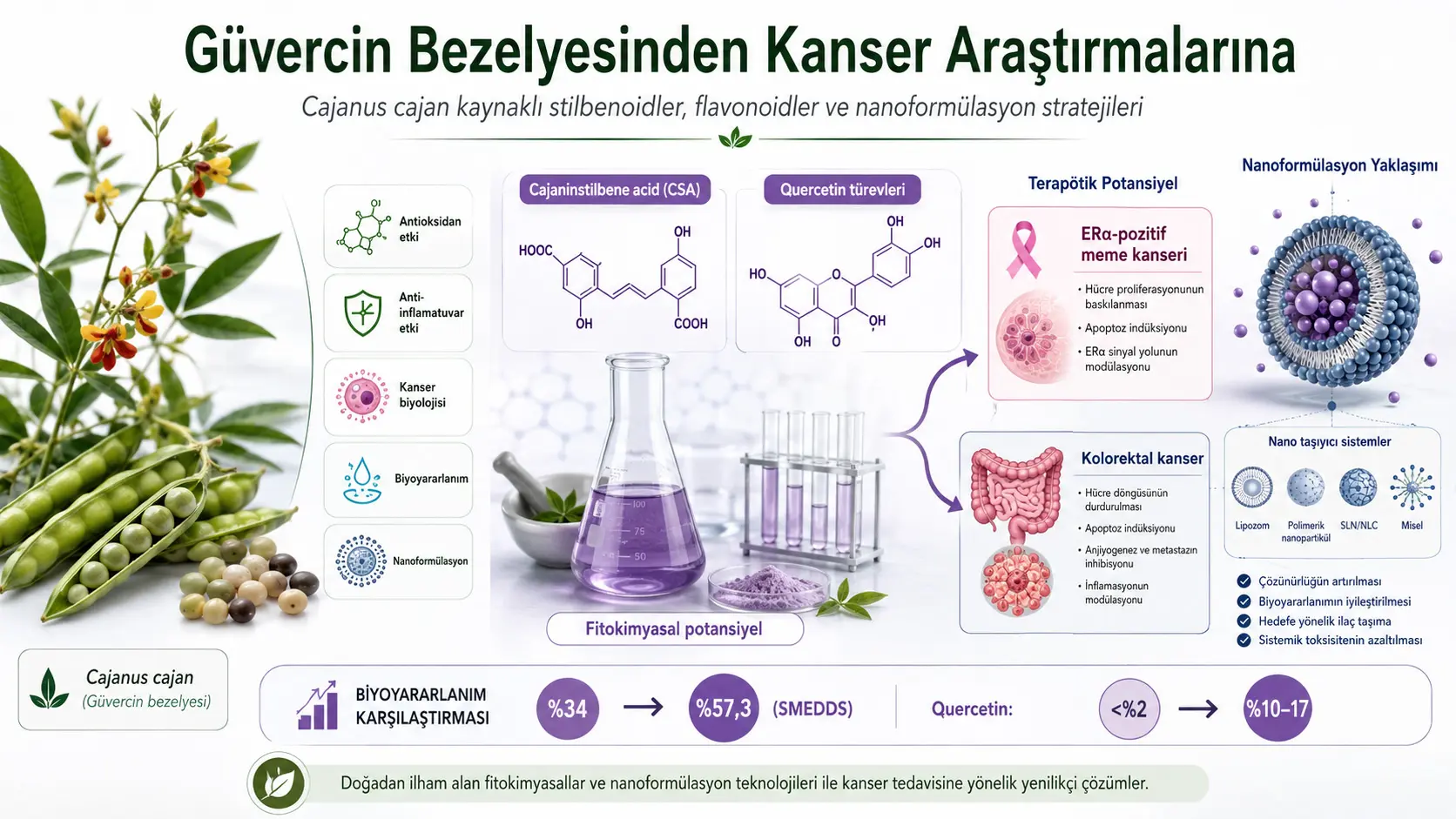
Масъалаи асосии ин review фаҳмидани потенсиали тиббии Cajanus cajan, як растаниест, ки арзиши кишоварзӣ ва ғизоии он маълум аст, ба таври systematic мебошад. Pigeon pea дар ҷаҳон ҳамчун legume-и муҳим барои ғизо ва кишоварзӣ шинохта мешавад. Аммо leaves, pod shells, seeds ва other parts-и plant на танҳо аз nutrient content, балки аз biologically active molecules мисли phenolic compounds, stilbenoids ва flavonoids ҳам ҷолибанд.
Ибораи “from crop wastage to cancer therapeutics” дар title-и study аз ҳамин сабаб муҳим аст. Authors пешниҳод мекунанд, ки parts of plant, ки метавонанд ҳамчун agricultural waste ё secondary product дида шаванд, аз viewpoint-и phytochemicals with therapeutic potential аз нав арзёбӣ шаванд. Ин both барои biomedical research ва sustainable resource use meaningful аст.
Аммо main question танҳо “Оё дар Cajanus cajan useful compounds ҳастанд?” нест. Deeper question чунин аст: Оё ин compounds метавонанд дар complex biological processes мисли inflammation, oxidative stress, metabolic disorders ва cancer meaningful effects нишон диҳанд; ва агар нишон диҳанд, чӣ гуна ин effects ба clinical use гузаронда мешаванд?
Чаро ин problem муҳим аст?
Natural products дер боз important source дар modern drug discovery будаанд. Many drugs аз plant ё microbial compounds илҳом гирифтаанд. Аммо natural compound дар cell culture effective бошад, ин direct маънои effective human drug буданро надорад. Drug development на танҳо biological activity, балки solubility, absorption, metabolism, target-tissue delivery, toxicity, dosing ва clinical efficacy-ро талаб мекунад.
Ҳамин problem ба compounds derived from Cajanus cajan ҳам тааллуқ дорад. Cajaninstilbene acid ё quercetin derivatives метавонанд in laboratory cancer cells, inflammatory pathways ё metabolic regulators-ро affect кунанд. Аммо whether oral administration leads to adequate absorption, survival from metabolism, arrival to target tissue, and therapeutically meaningful effect within safe dose range — separate question мебошад.
Therefore study phytochemical discovery alone-ро sufficient намедонад. Authors three components-ро combine мекунанд: phytochemical identification, mechanism / systems pharmacology ва nanotechnology-supported drug delivery. Without considering all three together, clinical potential of Cajanus cajan-derived compounds cannot be evaluated realistically.
Graphical abstract чӣ нишон медиҳад?
Graphical abstract shows Cajanus cajan-derived stilbenoids ва flavonoids within a multi-stage research pipeline. Pod shell, leaves and seeds are presented as sources; then extraction, phytochemical profiling, HPLC-MS/MS, LC-QTOF-MS ва metabolomics are shown as analytical methods to identify bioactive compounds.
Middle part of graphic emphasizes that stilbenoids and flavonoids may affect interconnected pathways involving oxidative stress, inflammation, metabolic regulation, cancer biology, neuroprotection and antimicrobial effects. Right side shows translational barriers: poor aqueous solubility, rapid metabolism and low oral bioavailability. Strategies proposed against these barriers include SMEDDS, nanoemulsions, polymeric nanoparticles, hydrogel carriers and lipid nanocarriers.
Main message of graphic is that Cajanus cajan compounds are treated not as classic single-target drug candidates but as phytochemical systems that may regulate multiple biological networks. Yet formulation and clinical-translation steps must be overcome for this potential to become real therapy.
Cajanus cajan кадом compounds дорад?
Review lists major biologically active compounds from Cajanus cajan including stilbenoids, flavonoids and phenolic compounds. Examples emphasized are:
- Cajaninstilbene acid (CSA): Important stilbenoid associated with Cajanus cajan. Central in review because of anti-inflammatory, metabolic and anticancer potential.
- Cajanol: One of reported flavonoid/phenolic bioactive compounds from plant.
- Pinostrobin: Flavonoid considered for various pharmacological activities.
- Orientin ва vitexin: Flavonoid glycosides frequently encountered in plant-bioactivity research.
- Quercetin derivatives: Belong to widely studied flavonoid family with antioxidant and anticancer potential.
- New stilbenoids: Study notes newly identified anti-inflammatory stilbenoids from Cajanus cajan as research-relevant.
One early ecological study showed phenolic compounds on pigeon-pea pod surfaces could affect feeding behavior of Helicoverpa armigera larvae. This suggests these metabolites are not accidental chemicals, but may relate to plant-defense mechanisms. Later pharmacological studies suggest effects on oxidative stress, inflammation, glucose metabolism, apoptosis and cellular-survival pathways.
Чаро Cajaninstilbene acid пешсаф аст?
One of most emphasized compounds is cajaninstilbene acid, or CSA. It stands out for several reasons. First, positioned as distinctive stilbenoid from Cajanus cajan. Second, studied not only in inflammation/metabolism but in mechanisms related to cancer biology. Third, compared with well-known flavonoids like quercetin, it may offer some bioavailability advantages.
Study discusses CSA especially in context of ERα-positive breast cancer. ERα means estrogen receptor alpha. In ERα-positive breast cancers, tumor cells may gain growth advantage from estrogen signaling. Therefore suppressing ERα level/signaling is an important treatment logic.
According to review, CSA may downregulate ERα protein in ERα-positive breast-cancer cells such as MCF-7, inhibit c-Myc signaling and show synergy with tamoxifen. Tamoxifen is classic anti-estrogen therapy used in ERα-positive breast cancer. Activity of CSA in tamoxifen-resistant MCF-7 cells is considered especially notable for research.
Фарқи anticancer байни CSA ва quercetin-3-methyl ether чист?
Review directly compares CSA with quercetin-3-methyl ether, or Q3ME, in terms of mechanism and target cancer type. It says CSA is more meaningful candidate for ERα-positive breast cancer, while Q3ME has stronger early evidence in colorectal cancer.
Main points reported for CSA:
- Primary target context: ERα-positive breast cancer, especially MCF-7 cells.
- Reported IC₅₀ = 61,25 ± 2,67 µM for MCF-7.
- Activity in tamoxifen-resistant MCF-7 cells: IC₅₀ = 188,22 µM.
- About 3-fold selectivity in ERα-positive MCF-7 versus ERα-negative MDA-MB-231 cells.
- Possible mechanism: downregulation of ERα protein, c-Myc inhibition and synergy with tamoxifen.
Points emphasized for Q3ME:
- Primary target context: colorectal cancer, especially RKO and SW1116 cells.
- Dose-dependent activity around 10–20 µM in colorectal-cancer cells.
- Possible mechanism: SMOX suppression, altered polyamine metabolism, reduction in spermine/spermidine and apoptosis induction.
- Additional effects through Notch1 blockade in breast-cancer stem cells have been reported.
Meaning of comparison is that CSA and Q3ME should not be placed in same generic “natural anticancer compound” category. They target different molecular vulnerabilities in different cancer types. CSA stands out more in ERα-axis breast-cancer biology, whereas Q3ME appears stronger in colorectal cancer via metabolic reprogramming.
IC₅₀ value чӣ гуна understood шавад?
Study mentions IC₅₀ values for different compounds. IC₅₀ is concentration required to reduce cell viability, enzyme activity or specific biological response by %50. In general, lower IC₅₀ suggests higher potency under same experimental conditions. But IC₅₀ alone does not mean clinical efficacy.
Basic relationship can be stated as:
\[ IC_{50} = biyolojik\ yanıtı\ %50\ azaltan\ konsantrasyon \]
This expression is not given as a mathematical equation in study; it is included here to explain IC₅₀ for readers. For example, Q3ME appearing active around 10–20 µM in colorectal-cancer cells suggests higher potency in cell culture. But absorption, tissue delivery, metabolism and toxicity need separate studies.
Чаро bioavailability ин қадар critical аст?
Even strong cell-culture compound has limited therapeutic value if little reaches systemic circulation after oral dosing. Thus review devotes significant attention to bioavailability, meaning fraction of administered dose effectively reaching systemic circulation.
CSA and quercetin derivatives differ markedly. According to review, free-form CSA has oral absolute bioavailability around %34. Free quercetin is generally reported below %2, with wide formulation dependence. Optimized quercetin formulations can raise this to %10–17.
Main barrier for CSA is described as UGT-mediated glucuronidation in gastrointestinal system. UGT refers to UDP-glucuronosyltransferase enzymes, which convert some compounds to glucuronides to facilitate elimination. Main metabolite for CSA is CSA-glucuronide, or CSA-G. For quercetin, problem is more complex: poor aqueous solubility plus extensive glucuronidation/sulfation.
SME/SMEDDS чӣ гуна CSA bioavailability-ро зиёд мекунад?
One of most notable formulation strategies for CSA in review is self-microemulsifying drug delivery system, or SMEDDS/SME. These systems comprise lipid, surfactant and cosolvent components that form very small-droplet microemulsions in gastrointestinal environment. Goal is to improve absorption of poorly soluble compounds and reduce metabolic loss.
According to data cited, free CSA bioavailability is around %34, whereas UGT-inhibitor SME system raises it to %57,3. This is interpreted as approximately %68 improvement.
Basic formula explaining this increase:
\[ \%\,iyileşme = \frac{Yeni\ biyoyararlanım - Başlangıç\ biyoyararlanımı}{Başlangıç\ biyoyararlanımı} \times 100 \]
Дар ин ҷо baseline bioavailability барои free CSA тақрибан %34 ва new bioavailability барои SME-CSA %57,3 мебошад. Мантиқи ҳисоб чунин аст: фарқи байни %57,3 ва %34 баробари %23,3 point аст; ин фарқ вақте ба initial value-и %34 тақсим мешавад, тақрибан %68 relative improvement медиҳад. Ин formula дар source study explicitly as mathematical equation дода нашудааст; дар ин ҷо танҳо барои шарҳи interpretation-и bioavailability increase истифода шудааст.
Чаро CSA аз quercetin аз ҷиҳати bioavailability бартарӣ дошта метавонад?
Review argues CSA may have an advantage over quercetin derivatives because its dominant barrier is presented as UGT-mediated glucuronidation. If main barrier is more defined and targetable, formulation strategy can be more predictable.
Quercetin faces more complex issues. Free quercetin is poorly soluble, has variable absorption because of lipophilicity, and undergoes extensive intestinal/hepatic glucuronidation and sulfation. Therefore phospholipid complexes, self-emulsifying systems, nanoformulations and other carriers all need consideration.
In summary, review logic is that CSA may have lower in vitro potency than some quercetin derivatives, but better bioavailability may make it more advantageous for in vivo development. This still is not proof of clinical superiority; controlled human trials are required.
SME-CSA ва nano-quercetin in vivo effectiveness чӣ гуна compare мешаванд?
Review explicitly states there is no direct head-to-head in vivo study between SME-delivered CSA and nano-quercetin. This is critical limitation. Comparison is indirect, placing data from separate studies side by side.
Key points for SME-CSA:
- Primary cancer context: ERα-positive breast cancer.
- Bioavailability: %57,3.
- Report of %68 increase in tumor inhibition compared with free CSA.
- Activity in tamoxifen-resistant MCF-7 cells.
- Possible mechanism: ERα downregulation and c-Myc inhibition.
Key points for nano-quercetin:
- Broader cancer/disease spectrum: breast, brain and colorectal cancer; also diabetic nephropathy and neurodegenerative models.
- Bioavailability: around %10–17 with optimized systems.
- Effective dose range reported as 10–100 mg/kg.
- Human case-report-level data are mentioned for glioblastoma with clinical response and survival improvement.
- Possible mechanisms: HDAC inhibition, antioxidant effects and brain-targeting advantages.
This leads to cautious conclusion: SME-CSA is presented as more logical candidate for ERα-positive breast cancer, while nano-quercetin carriers may be more advantageous for brain tumors or broader cancer spectrum. But without direct comparative trial, definitive superiority cannot be claimed.
Маҳдудиятҳои SME systems кадомҳоянд?
Review ба таври муфассал мефаҳмонад, ки SME systems муфиданд, аммо solution-и complete нестанд. Ин section махсусан муҳим аст, зеро дар natural-product formulations чунин simplification, ки “nanocarrier истифода шуд, problem solved”, scientifically correct нест.
Main limitations of SME systems:
- Stability problems: Phenolic compounds under heat, pH, mechanical stress and processing conditions degrade шуда метавонанд. Emulsion droplets may coalesce over time and long-term shelf stability метавонад problematic шавад.
- Gastrointestinal instability: pH, enzymes, bile salts and food interactions in GI tract can alter formulation behavior.
- Incomplete metabolic inhibition: Even if UGT-inhibitor SME raises CSA bioavailability from %34 to %57,3, this is not %100. Metabolic loss continues.
- Loading and encapsulation efficiency: Not every phenolic compound is carried with same efficiency. Lipophilicity and chemical stability affect loading success.
- Excipient toxicity: Some surfactants/emulsifiers at high concentrations may carry cytotoxicity risk.
- Controlled-release difficulty: SME systems often favor rapid release; target-specific and sustained release needs more complex design.
- Scale-up and cost: Laboratory success may not transfer easily to industrial scale.
- Regulation: Natural-product + nanoformulation combination is subject to complex regulatory assessment.
Therefore underlying message is clear: systems like SME-CSA are promising but still intermediate technologies requiring improvement. Future may need hybrid platforms combining SME with nanoparticles, phospholipid complexes or hydrogel systems.
Чаро alternative delivery systems лозим буда метавонанд?
Review discusses other carrier strategies beyond SME. Nanoemulsions may offer smaller droplet size and better stability. Liposomes and nanocochleates can provide higher encapsulation and targeted-release advantages, although cost and stability are challenges. Phospholipid complexes may improve both solubility and metabolism, but may not suit every phenolic compound. Hybrid hydrogels can provide more sustained release and stability, but characterization is more complex.
Study emphasizes that no single carrier is ideal for all phenolics. Each compound has different chemical structure, metabolic pathway, target tissue and therapeutic purpose. Therefore formulation strategies for CSA, Q3ME and quercetin analogues should be optimized separately.
Systems pharmacology model чӣ маъно дорад?
Overall approach of review is to evaluate Cajanus cajan compounds within systems pharmacology rather than as single-target drugs. Systems pharmacology accepts that compound or mixture may affect multiple biological pathways simultaneously, which is especially relevant for botanical phytochemical systems.
Study states stilbenoids and flavonoids may influence networks including:
- Oxidative stress: ROS levels, lipid peroxidation and antioxidant defense.
- Inflammation: Signaling pathways such as NF-κB, TNF-α, IL-6, TGF-β.
- Metabolic regulation: Glucose utilization, insulin sensitivity and metabolic stress.
- Cancer biology: Apoptosis, cell cycle, c-Myc, ERα, Notch1 and polyamine metabolism.
- Neuroprotection: Neuronal survival, oxidative injury and inflammatory responses.
This model is promising because complex diseases such as cancer and metabolic disorders are not explained by one pathway. But it also creates difficulty: multi-target effects make mechanism harder to prove. Which component affects which target, how much, at what dose synergy occurs, and whether effects are safe in humans require detailed studies.
Future research recommendations кадомҳоянд?
Review proposes several main directions:
- Target validation: Molecular targets affected by CSA, Q3ME and other Cajanus cajan compounds should be experimentally clarified.
- Multi-omics characterization: Genomic, transcriptomic, proteomic and metabolomic data should systematically map multi-pathway effects.
- Formulation optimization: SME, nanoemulsion, polymeric nanoparticles, hydrogel and phospholipid-complex strategies should be developed comparatively.
- Clinical translation: Most promising candidates require pharmacokinetic, toxicity, dose-range and early clinical-safety studies.
- Sustainable resource use: More economical and sustainable extraction methods are needed to recover phenolics from plant waste.
Таъсир ба everyday life ва technology чӣ гуна фаҳмида шавад?
Study does not directly say “eating pigeon pea prevents cancer” or “Cajanus cajan is a cancer treatment.” Such interpretation would be scientifically wrong. Everyday-life meaning must be more careful: Food plants and agricultural products can be valuable molecular sources for drug discovery when analyzed and formulated appropriately.
This is important in two ways. First, agricultural waste or undervalued plant parts can be converted into biomedical value. Second, traditional knowledge of natural products can be retested using modern chemistry, cell biology, pharmacokinetics and nanotechnology. But conclusions such as “natural means safe” or “works in cell culture means treats humans” must be avoided.
Review shows Cajanus cajan offers compounds scientifically worth investigating especially in cancer, inflammation and metabolic-disease research. Yet translating this potential to actual therapy requires long translational pathway.
Ҷиҳатҳои қавии study
One strength is treating Cajanus cajan not through one compound only, but together with stilbenoids, flavonoids, phenolics and formulation strategies. This enables broader systems-pharmacology evaluation.
Second strength is comparison of CSA and quercetin derivatives from both anticancer-mechanism and bioavailability perspectives. Many reviews focus only on biological activity, whereas this work foregrounds absorption and metabolism, critical for clinical translation.
Third strength is explicit discussion of nanoformulation and delivery strategies. One of commonly neglected problems in natural-product research is whether an active molecule reaches target tissue sufficiently in vivo; this review makes that visible.
Fourth strength is acknowledging limitations of SME. Study does not merely say “nanoformulation solves the problem”; it discusses stability, excipient toxicity, metabolic loss, scale-up and regulatory challenges.
Маҳдудиятҳои study
Most important limitation is that this is unreviewed preprint review. Its interpretations and synthesis may change after independent academic evaluation.
Second, no new experimental data are produced. Cell-culture, animal, pharmacokinetic and nanoformulation findings come from different sources. Therefore comparisons are often indirect rather than head-to-head under same conditions.
Third, there is no direct in vivo comparison between SME-CSA and nano-quercetin, and study explicitly says so. Question “which is definitely superior?” requires comparative experiments with same cancer model, dosing logic and pharmacokinetic analysis.
Fourth, clinical evidence level is limited. Some human case-report-level data are mentioned for nano-quercetin, but not randomized clinical-trial evidence. For CSA, study states no clinical-trial data exist. Thus no direct clinical treatment recommendation can be made.
Fifth, natural-product mixtures are inherently variable. Levels of plant compounds can differ with growing conditions, harvest time, plant part and extraction method. Standardization is therefore critical for clinical translation.
Study чӣ мегӯяд ва чӣ намегӯяд?
Study says Cajanus cajan-derived stilbenoids and flavonoids, especially CSA and quercetin derivatives, are multi-target compounds worth investigation in inflammation, oxidative stress, metabolic regulation and cancer signaling. CSA is notable for ERα-positive breast cancer and bioavailability advantage. Q3ME and nano-quercetin are important for colorectal cancer, brain targeting and broader disease spectrum. Nanoformulations may improve translational potential.
Study does not say Cajanus cajan consumption treats cancer, CSA or quercetin derivatives are approved anticancer drugs, SME-CSA is proven safe/effective in humans, or nanoformulation completely solves all bioavailability problems. Evidence is promising but insufficient for clinical application.
Усул ва Натиҷаҳои Таҳқиқот
Усули study
| Ҷузъи усул | Татбиқ дар study | Маъно |
|---|---|---|
| Навъи study | Review / preprint review | Generates no new experimental data; synthesizes existing literature. |
| Plant focus | Cajanus cajan, pigeon pea | Evaluates phytochemical therapeutic potential of food/agricultural plant. |
| Main compounds | CSA, cajanol, pinostrobin, orientin, vitexin, quercetin derivatives, stilbenoids | Discusses natural-product pharmacology centered on stilbenoids and flavonoids. |
| Key comparisons | CSA vs Q3ME; SME-CSA vs nano-quercetin | Evaluates differences in anticancer mechanism and bioavailability. |
| Formulation focus | SMEDDS/SME, nanoemulsion, polymeric nanoparticles, hydrogel, phospholipid complexes | Addresses translation barriers such as low solubility and metabolic degradation. |
CSA ва Q3ME anticancer comparison
| Хусусият | Cajaninstilbene acid (CSA) | Quercetin-3-methyl ether (Q3ME) |
|---|---|---|
| Chemical class | Stilbenoid | Flavonol methyl ether derivative |
| Main cancer context | ERα-positive breast cancer, especially MCF-7 | Colorectal cancer, especially RKO and SW1116 |
| Reported IC₅₀ | 61,25 ± 2,67 µM for MCF-7 | About 10–20 µM in colorectal-cancer cells |
| Resistant-cell context | Active in tamoxifen-resistant MCF-7; IC₅₀ = 188,22 µM | Reported as not studied in tamoxifen-resistance context. |
| Mechanism | Downregulates ERα protein, inhibits c-Myc, synergizes with tamoxifen | Suppresses SMOX, reduces polyamines and induces apoptosis |
| Selectivity | About 3-fold selectivity in ERα+ MCF-7 over ERα− MDA-MB-231 | No similar selectivity data stated. |
| Study interpretation | More suitable candidate for ERα-positive breast cancer | More potent candidate for colorectal cancer |
Bioavailability comparison
| Parameter | CSA | Quercetin ва derivatives |
|---|---|---|
| Free-form bioavailability | About %34 | Generally below %2 for free quercetin |
| Main barrier | UGT-mediated glucuronidation in gastrointestinal system | Poor solubility + glucuronidation/sulfation |
| Main metabolite | CSA-glucuronide (CSA-G) | Quercetin-glucuronide and quercetin-sulfate derivatives |
| Optimized-formulation value | %57,3 with UGT-inhibitor SME | About %10–17 with phospholipid/self-emulsifying/nano systems |
| Drug-development interpretation | More predictable and higher bioavailability advantage | More complex metabolic and solubility barriers |
Indirect in vivo comparison of SME-CSA and nano-quercetin
| Хусусият | SME-CSA | Nano-quercetin |
|---|---|---|
| Direct head-to-head study | None | None |
| Primary strong context | ERα-positive breast cancer | Brain targeting, glioblastoma, colorectal and broader disease areas |
| Bioavailability | %57,3 | %10–17 |
| Dose requirement | Potentially lower dose due to higher bioavailability | Higher dose ranges of 10–100 mg/kg reported |
| Mechanism | ERα downregulation and c-Myc inhibition | HDAC inhibition, antioxidant effect and carrier-dependent targeting |
| Clinical data | No human clinical-trial data | Human case-report-level data mentioned for glioblastoma |
Маҳдудиятҳои SME systems
| Соҳаи limitation | Problem | Маъно дар study |
|---|---|---|
| Stability | Degradation with heat, pH, mechanical stress and long-term storage | Laboratory success may not persist during storage/manufacturing. |
| GI interaction | pH, enzymes and bile components may alter formulation | Encapsulation alone does not guarantee bioavailability. |
| Metabolic inhibition | UGT inhibition incomplete; CSA bioavailability remains %57,3 | Metabolic loss not eliminated completely. |
| Excipient safety | High surfactant/emulsifier levels may be cytotoxic | Formulation itself needs safety testing. |
| Controlled release | SME systems often favor rapid release | Targeted/sustained release may need hybrid system. |
| Industrial scale | Cost, scale-up and regulation challenges | Clinical/commercial translation requires separate development. |
Самтҳои future research
| Соҳаи research | Чаро лозим аст? | Expected contribution |
|---|---|---|
| Target validation | Direct molecular targets of CSA and Q3ME need clarification. | Supports more reliable drug-development strategy. |
| Multi-omics analysis | Multi-network effects need systematic measurement. | Strengthens systems-pharmacology model. |
| Formulation optimization | Solubility, metabolism and target-delivery problems must be addressed. | May improve in vivo effectiveness. |
| Comparative in vivo studies | SME-CSA and nano-quercetin not directly compared. | Can determine real superiority by cancer type. |
| Clinical studies | Cell/animal results do not prove clinical effect. | Can evaluate safety, dose and efficacy in humans. |
| Sustainable extraction | Agricultural resources should be used efficiently. | Can recover valuable phytochemicals from plant waste. |
Умумии technical conclusion
Technical conclusion is that Cajanus cajan-derived stilbenoids and flavonoids offer multi-target research candidates for cancer, inflammation, oxidative stress and metabolic disease. CSA stands out for ERα-positive breast cancer and better bioavailability profile, whereas quercetin derivatives and Q3ME are notable for broader cancer spectrum, colorectal-cancer mechanisms and nanoformulation experience. But evidence for any candidate is insufficient to make direct clinical-treatment claims. Most realistic path is coordinated progression of phytochemical discovery, mechanism validation, nanotechnological delivery and clinical validation.
Ёддошт оид ба Манбаъ ва Усул
Ин мақола бар review-и Abhijit G. Banerjee ва Nikita Chatterjee бо унвони “Therapeutic Potential of Cajanus cajan-Derived Stilbenoids and Flavonoids: From crop wastage to cancer therapeutics” асос ёфтааст. Study pharmacological potential of stilbenoids, flavonoids and phenolic compounds from Cajanus cajan, especially in anticancer and formulation-technology contexts, evaluates мекунад.
Source text unreviewed preprint review мебошад ва statement-и “This preprint research paper has not been peer reviewed” дорад. Therefore it has not undergone peer review. Conclusions should be read as interpretive synthesis of existing literature, not finalized clinical recommendation or approved treatment standard.
Ин content танҳо abstract, graphical abstract, comparison tables, mechanism discussions, bioavailability data, SME limitations ва referenced literature discussions in PDF-ро истифода мекунад. Claims of guaranteed clinical treatment, proven human efficacy, or that consuming Cajanus cajan prevents/treats disease, which are not in PDF, have not been added.
Study does not generate new experimental data, clinical trial or systematic meta-analysis. Findings on CSA, Q3ME, quercetin derivatives and nanoformulations are compiled from different sources. Because no direct head-to-head in vivo study exists between SME-CSA and nano-quercetin, superiority interpretations require caution. Future work should focus on target validation, multi-omics, pharmacokinetics, safety assessment, formulation optimization and clinical translation.
Шарҳ гузоред
Нишонии почтаи электронии шумо нашр намешавад. Майдонҳои ҳатмӣ бо * нишон дода шудаанд